Why WC26 Matches Could Average 105 Minutes (and Counting)
Ten-plus minutes of added time is the new normal. We trace the Pierluigi Collina directive, the ball-in-play data, and the FIFPRO pushback ahead of WC26.
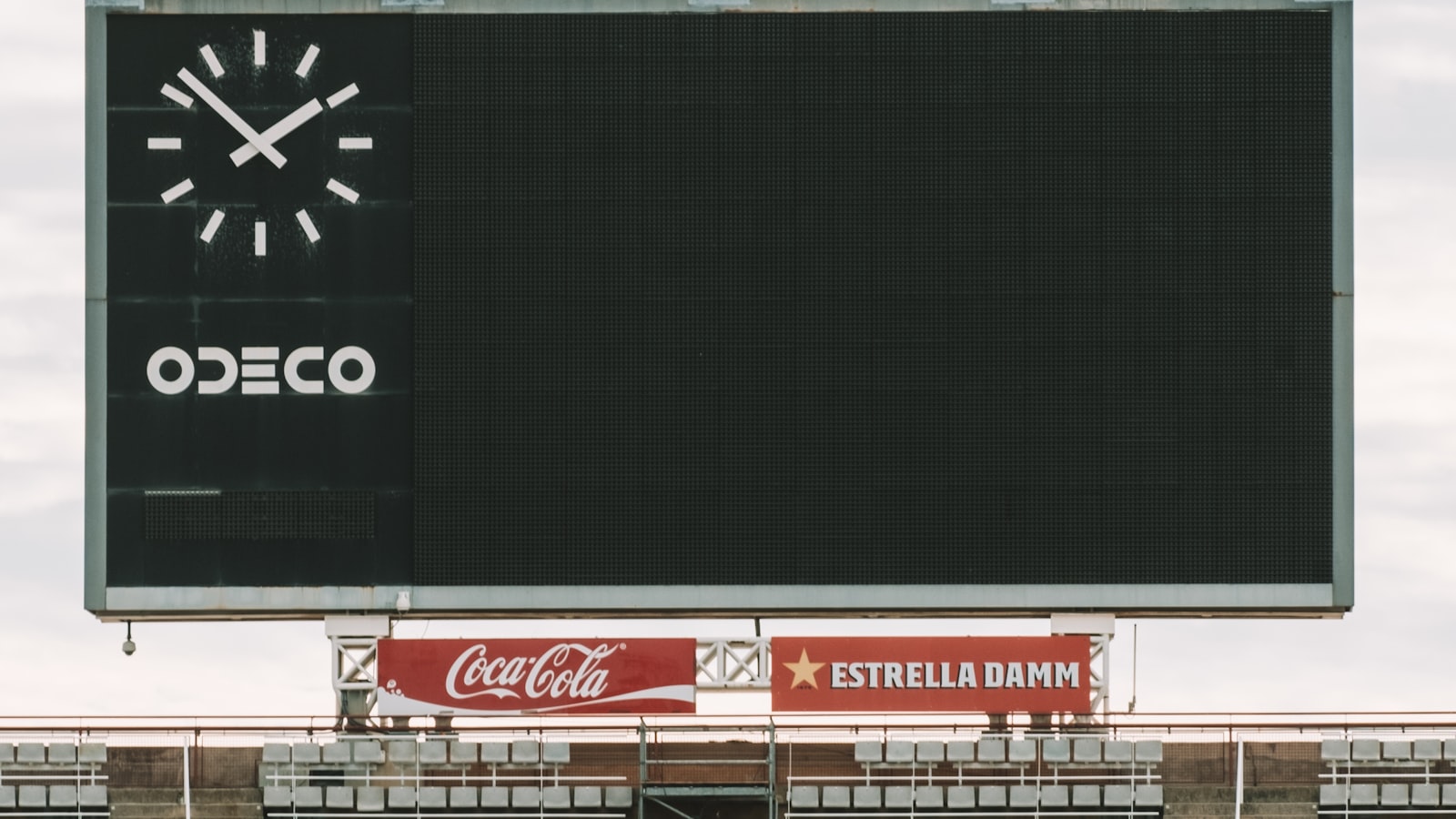
England vs Iran, 21 November 2022, the opening match of Qatar 2022. The fourth official lifts the LED board at the end of the first half and the number on it is 14. Fourteen minutes of stoppage time. The press box, half-empty because half the press were still queuing at the security check, audibly gasps. The match runs 117 minutes in total. The pattern repeats across the group stage. Spain–Germany: 98:30. Argentina–Saudi Arabia: 104:35. Average added time across the 64 matches: 11.6 minutes, more than double the 2018 average.
That was not a glitch. It was a directive. And at WC26, it will probably go further.
The Collina directive, in one paragraph
In a pre-tournament briefing to referees at Qatar 2022, Pierluigi Collina, the chair of FIFA's Referees Committee, told officials to be "more accurate" in measuring time lost to delays — specifically substitutions, goal celebrations, injuries, and VAR checks. The numbers FIFA had been using, said Collina, were "obviously inaccurate". A goal celebration that ran 90 seconds was being credited as 30. A double substitution that consumed two minutes was being recorded as the IFAB-prescribed 30 seconds.
The directive was simple: add the actual time, not the bookkeeping time. The result, mechanically, was that injury-time numbers shot up. The Iran-England 14-minute half was not an exotic case; it was the directive applied honestly to a match with three injuries, four bookings, two VAR checks, and a goal celebration. Per the FIFA Technical Study Group's Qatar 2022 report, the average match duration including stoppage time was 101 minutes 30 seconds — nearly seven minutes longer than the 2018 average.
The 2026 panel of referees has been briefed to continue and extend the practice.
What WC26 referees have actually been told
Drawing on FIFA's pre-tournament officiating workshops (held at the Royal Garden Hotel in Frankfurt across March 2026) and confirmed via The Athletic's reporting, the WC26 instructions to the referee panel include:
- Continue precise time-keeping of delays. Stoppages must be measured to the actual elapsed second, not the IFAB nominal value.
- Target a ball-in-play window of 60-65 minutes per match. Across the 90 minutes plus stoppage, FIFA wants roughly two-thirds of the running clock to feature an active ball. The number sounds modest — historically, men's World Cup matches have averaged 55-58 minutes of ball-in-play.
- VAR check time is added separately. Following the SAOT speed improvements, VAR delays should fall, but they are tracked and added regardless.
- Goal celebrations are not capped, but they are timed. Players are not punished for celebrating; the time is simply added back at the end of the half.
- Substitutions: minimum 30 seconds per change, real time if longer. With five subs permitted in regulation and a sixth in extra time, this alone can add three to four minutes per match.
The arithmetic is straightforward. A typical WC26 match could see: 4 minutes of substitution time + 2 minutes of goal celebrations + 1.5 minutes of injuries + 1 minute of VAR checks + 1 minute of miscellaneous delays = ~9.5 minutes of added time on average, with knockout-round matches likely to push closer to 12. Add extra time on a 0-0 and you have a 130-minute spectacle.
The 2026 projection is FIFA-Editorial's own estimate, based on the published 2022 figure plus expected impact of (a) continued Collina directive enforcement, (b) the new pitchside-announcement protocol after VAR reviews adding 30-60 seconds per OFR, and (c) the slight reduction in offside-check time from improved SAOT. Treat it as directional, not gospel.
The ball-in-play story is just as important
Stoppage time is only half of the picture. The metric Opta and FIFA's Technical Study Group actually care about is ball-in-play time — the minutes of each match where the ball is actually moving on the pitch. This excludes throw-ins waiting to be taken, free-kicks being walked up to, goalkeepers holding the ball, and substitutions in progress.
Ball-in-play in men's professional football has slowly declined over the last 20 years, from around 60 minutes per match in the early 2000s to 55-57 in the late 2010s. The reasons are well-documented: tactical fouling at the edge of the area, more time spent in goalkeeper possession, slower throw-in routines, and — most damningly — deliberate game management by leading teams.
Qatar 2022 reversed the decline. With more accurate time-keeping, the effective ball-in-play time rose by nearly three minutes per match. FIFA's TSG report explicitly tied the increase to the Collina directive: by adding the lost time on at the end, players had less incentive to waste it in the first place. The biggest behavioural change, the report noted, was a 12% reduction in goalkeeper-possession durations in the second half of matches.
If the directive continues to bite at WC26, we should see ball-in-play tick up again — possibly into the 60-62 minute range. That would be the highest figure for a men's World Cup since 2002.
The IFAB rule changes between 2018 and 2026
The Collina directive lives on top of a thicket of IFAB rule changes that have themselves slowed the game down. Sorting the cumulative impact requires a timeline.
- 1
IFAB approves dropball reform
Uncontested dropballs to the team in possession. Marginal stoppage reduction.
- 2
Goal-kick law change
Ball can be played short from goal-kick without leaving the area. Encourages build-up but adds setup time. Net effect: modest increase in ball-in-play but more time per goal-kick.
- 3
Five-substitution rule introduced
Pandemic-era temporary change made permanent in 2022. Up to five subs per team in regulation, made in three windows. Adds 3-4 min stoppage per match on average.
- 4
Collina directive at Qatar 2022
Referees instructed to accurately measure all delays. Average added time more than doubles. Match duration jumps to 101:30.
- 5
Captain-only protocol approved
Only the team captain may approach the referee on contentious decisions. Reduces crowding around officials but is enforced unevenly.
- 6
Pitchside-announcement trial codified
Referee may announce VAR decisions to the stadium over the PA. Adds 30-60 seconds per OFR but improves transparency.
- 7
Goalkeeper 8-second rule clarified
Goalkeepers limited to 8 seconds in possession (up from 6, with stricter enforcement). Designed to limit time-wasting.
- 8
WC26 referee briefing in Frankfurt
Collina directive reaffirmed and extended. New ball-in-play target of 60-65 minutes communicated to centre referees.
The pushback — FIFPRO and the workload question
Not everyone is celebrating longer matches. The strongest voices in opposition are the player unions, led by FIFPRO.
The case is straightforward. WC26 is the largest tournament in football history: 48 teams, 104 matches, players potentially playing up to seven matches in 32 days (group stage of three, Round of 32, Round of 16, quarter-final, semi-final, final). Add 11-12 minutes of stoppage to every one of those matches and a finalist plays the equivalent of eight 90-minute matches of game time on the legs of seven.
FIFPRO's 2024 Player Workload Monitoring Report flagged three concerns specific to WC26:
- Cumulative high-intensity distance. Elite players average 1,100-1,200 metres of high-intensity running per 90 minutes. Add 10% more game-time and you add roughly 110-120 metres per match. Across a tournament run, that is an additional ~800 metres of high-intensity load on already overworked legs.
- Recovery windows. Group stage matches at WC26 can be separated by as little as three days; the Round of 32 follows the group stage by 48-72 hours. Longer matches eat into the recovery window in real terms — extra ice baths, longer cool-downs, less sleep.
- The summer factor. Five WC26 venues (Dallas, Houston, Monterrey, Atlanta, Miami) are flagged as elevated heat-stress by the climate-kickoff analysis. Longer matches in higher humidity multiply the physiological cost.
FIFA's response, articulated by Collina in a March 2026 press conference, is that accurate time-keeping is the law as written and that any compensation should come through training-camp protocols and squad rotation. The deeper standoff — between an expanded tournament and the players being asked to play it — is far from resolved. Our injury watch and squads tracker pages will follow the load consequences as the tournament unfolds.
What this means for fans
Three practical implications you should plan around if you are attending or hosting watch parties at WC26.
Plan for matches to run 100-110 minutes. Even a routine group-stage fixture with one or two goals will likely consume 100+ minutes from kick-off to final whistle. If you are at a stadium, factor that into your transit timing. If you are at a watch party, factor it into your second-half pizza orders.
Knockout matches with extra time will routinely cross 135 minutes. A 0-0 after 90 plus 12 of stoppage, then 30 of extra time plus another 3-5, plus a penalty shootout. That is a three-hour broadcast minimum. The extra-time penalties predictor walks through how often the tournament has reached the spot historically.
The 90th-minute goal era is back. Long stoppage times have already produced the most dramatic late goals at recent World Cups (England's late winners in 2022 group play, Spain–Morocco's epic in the Round of 16). Expect more, not fewer. Goals between minutes 90 and 105 at Qatar were up 38% on Russia 2018, per Opta. The clock has been giving teams more time to find the moment — and increasingly, they have.
“The instruction is clean: count the time honestly. If a celebration takes 90 seconds, add 90 seconds. If a substitution takes a minute, add a minute. Football is 90 minutes of ball-in-play, not 90 minutes of bookkeeping. We are not changing the laws. We are applying them.
”
Are FIFA's longer stoppage times good for the game?
What to watch on opening day
Three signals worth tracking when Mexico vs South Africa kicks off at Estadio Azteca on 11 June 2026:
- The first-half added-time board. If it reads 6 or higher with no major injury, the directive is in full effect.
- Mexico's goalkeeper possession durations. Watch how long Memo Ochoa (or his successor) holds the ball after collecting it. The 8-second rule is being enforced.
- The pitchside-announcement after the first VAR check. Whether the referee uses it in the opener will tell you whether referees plan to lean on the transparency tools, or only use them when a clear and obvious overrule occurs.
For the rest of the officiating-tech story, see SAOT 2026, VAR changes 2022-2026, and the referee toolkit. The full schedule maps every match a longer clock will touch.
Frequently asked
Why are World Cup matches getting longer?
What is the projected average match length at WC26?
What is ball-in-play time?
Has IFAB changed the rules on stoppage time?
What does FIFPRO say about longer matches?
Will stoppage time be capped at WC26?
Are late goals more common with longer stoppage?
Sources (5)
- FIFA — Technical Study Group, Qatar 2022 reportaccessed 2026-05-20
- IFAB — Laws of the Game 2024-25accessed 2026-05-20
- FIFPRO — Player workload reportaccessed 2026-05-20
- The Athletic — Why World Cup matches are getting longeraccessed 2026-05-20
- Opta — Ball-in-play analysisaccessed 2026-05-20
Sources (5)
- FIFA — Technical Study Group, Qatar 2022 reportaccessed 2026-05-20
- IFAB — Laws of the Game 2024-25accessed 2026-05-20
- FIFPRO — Player workload reportaccessed 2026-05-20
- The Athletic — Why World Cup matches are getting longeraccessed 2026-05-20
- Opta — Ball-in-play analysisaccessed 2026-05-20
You might also like