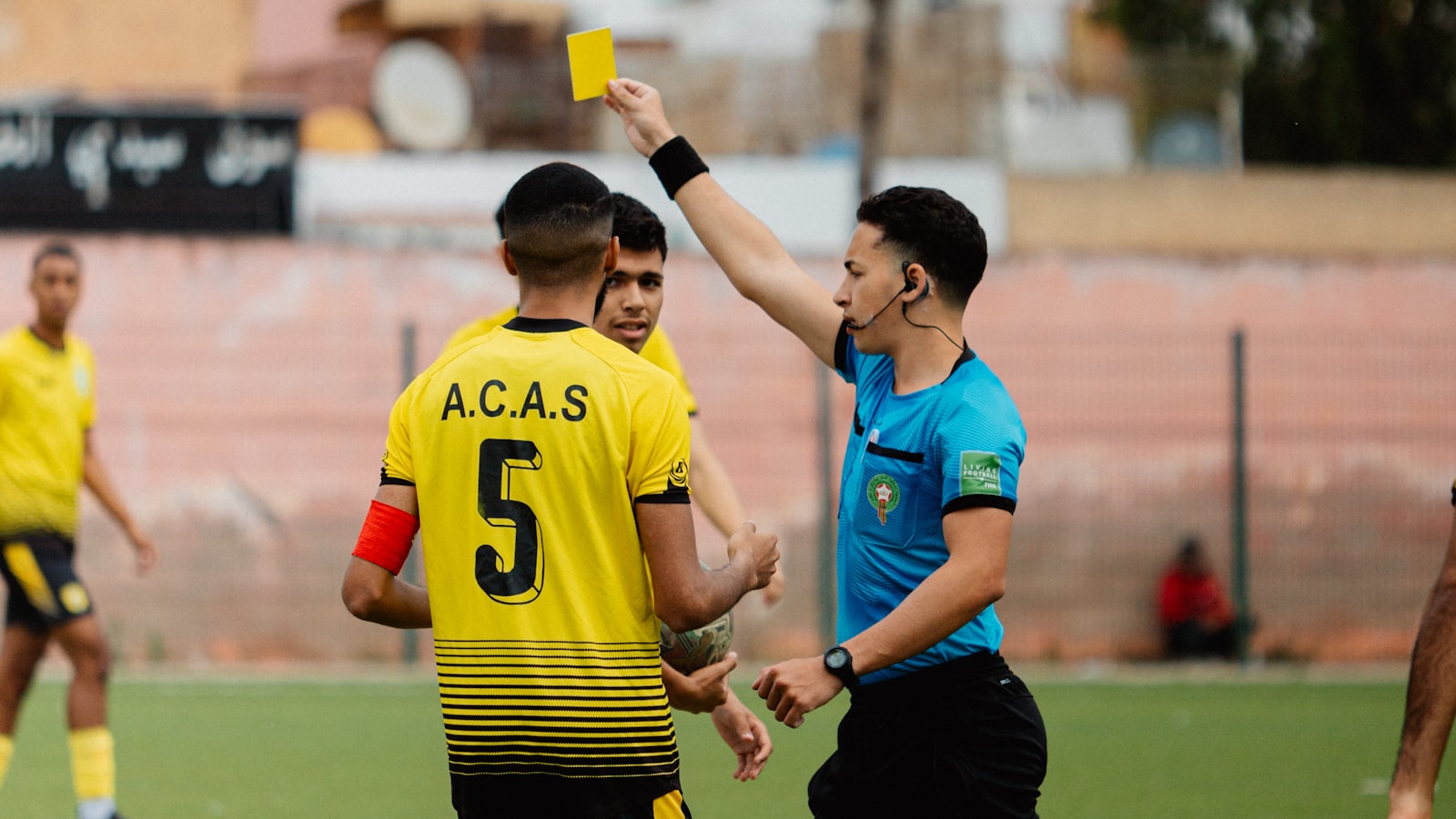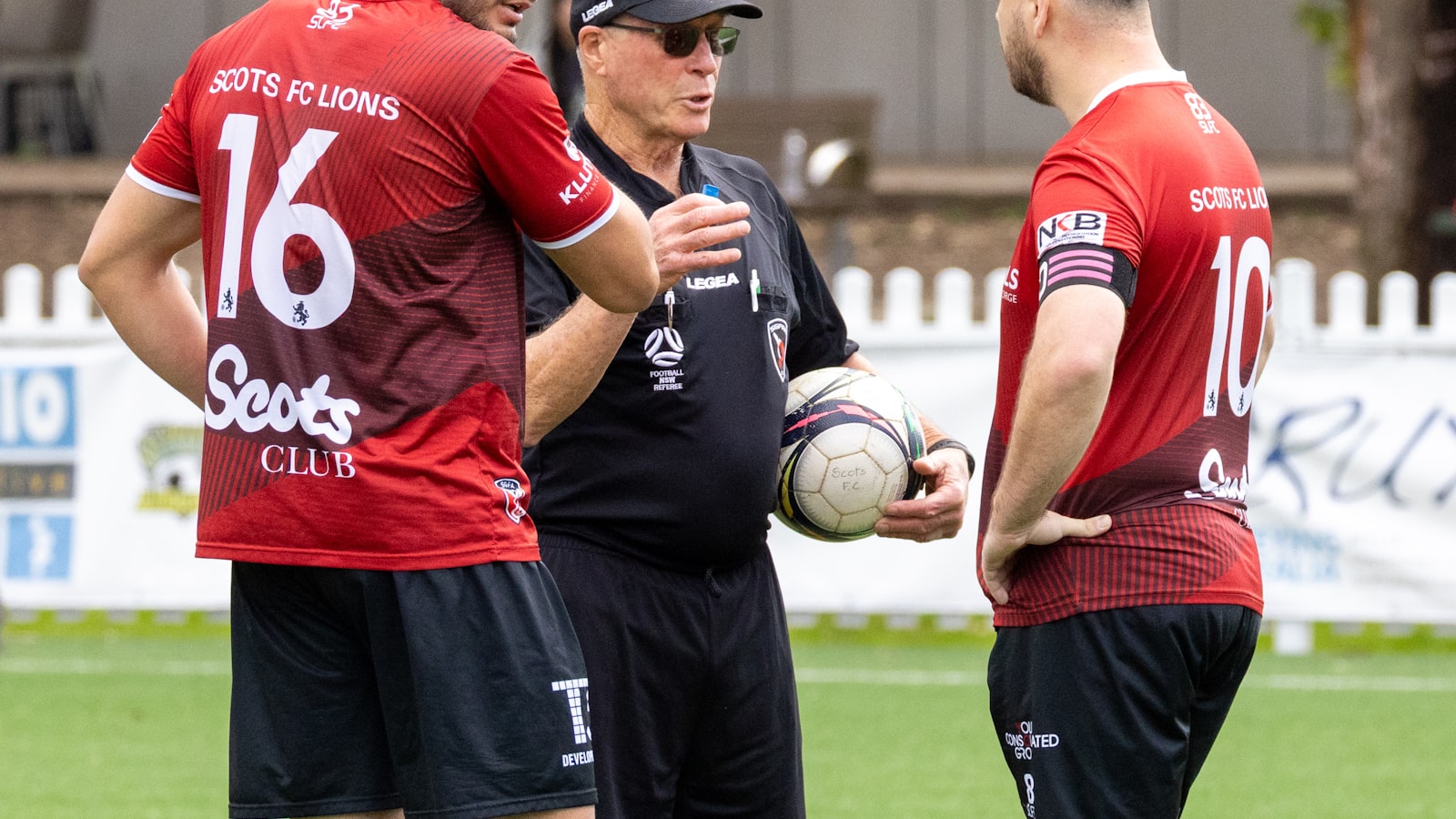
VAR Explained: How Referees Make the Call
What is VAR in football? A clear, no-jargon walkthrough of the four review categories, the on-field review, and semi-automated offside at the 2026 World Cup.
If you have ever sat in a stadium staring at a giant screen flashing REVIEW IN PROGRESS while the referee jogs to a monitor and the whole place holds its breath — congratulations, you have lived through VAR. This page exists to answer the question every casual viewer eventually asks at a watch party: what is VAR in football, exactly, and why does that goal need to wait three minutes?
The short version: VAR is a team of officials watching a bank of monitors, with the power to alert the referee to a clear and obvious mistake in one of four specific categories. The long version is below. We will walk through the categories, the review process, the semi-automated offside system used at the 2026 World Cup, and the moments that made VAR famous (and infamous).
What VAR is and what it is not
VAR stands for Video Assistant Referee. It is a person — usually three or four people, working as a team — sitting in a centralised video operation room watching the match on multiple camera angles. Their job is to assist the on-field referee. They cannot make decisions on their own. They can only recommend the on-field referee to either change a call or stick with it.
VAR is not:
- A second referee. The on-field referee remains the final decision-maker.
- A replay system fans can ask for. There is no "challenge" coupon as in tennis or American football. Coaches and players cannot request a review.
- A way to re-referee every contentious incident. VAR can only intervene in four narrow categories.
VAR was introduced into the men's World Cup at Russia 2018, expanded with semi-automated offside in 2022, and the 2026 World Cup officials panel announced by FIFA on 2026-04-09 includes 30 dedicated video match officials (FIFA, Match officials appointed). That is a record number for a men's World Cup and a direct response to the new 48-team format.
The four categories — and only these four
VAR has a strict scope. The on-field referee retains full control over every other incident on the field. The four categories are:
- Goal or no-goal. Was the ball over the line? Was there an offside, a foul, or a handball in the build-up that should disallow it?
- Penalty or no-penalty. Was a foul committed inside the penalty area that the on-field referee missed, or did the awarded penalty actually take place outside the box?
- Direct red card. Not a second yellow — only a straight red. Did a tackle, a violent action or denial of an obvious goal-scoring opportunity merit a sending-off?
- Mistaken identity. Did the referee book or send off the wrong player?
That is it. Yellow cards (other than mistaken-identity yellows) are not reviewable. Corners and throw-ins are not reviewable. Most fouls in midfield are not reviewable. The bar is high on purpose: VAR is designed to stop catastrophic errors, not to relitigate every 50/50.
Walk through a video review
Referee makes the initial call on the pitch. VAR can only intervene on four match-changing categories: goals, penalties, direct red cards, and mistaken identity (MOI).
"Clear and obvious error" — the most important phrase in modern football
This is the threshold for VAR intervention. Even if VAR believes a call is wrong, they cannot recommend an overturn unless the original call was a clear and obvious error — a phrase written into the IFAB Laws of the Game.
The reason: every decision in football is partly subjective. Was the contact enough to fall down? Was the handball "deliberate"? If reasonable observers can disagree, the on-field call stands. VAR is there for the calls where the broadcast replay makes everyone in the room say "oh".
Examples that meet the threshold:
- A two-footed studs-up tackle the referee did not see because his view was screened.
- A goal scored with a clearly handled ball.
- A clear handball in the box that was missed.
- A second yellow card given to the wrong player.
Examples that do not meet the threshold:
- A 50/50 penalty appeal where two players come together and one falls. If the referee says play on, VAR will usually agree to leave the call alone.
- A possible handball where the ball strikes a defender's arm in a natural position.
- A late tackle that is yellow-card material — even if a player is hurt.
That distinction — "wrong" vs "clear and obvious error" — is the single most common source of fan confusion. The next time you see VAR refuse to overturn a soft penalty, this is why.
The on-field review process, step by step
Here is what actually happens in those uncomfortable two minutes:
- The play continues. VAR is reviewing in the background. The whistle does not blow yet.
- VAR contacts the referee. Through an earpiece, the VAR team tells the referee something like "Check, possible penalty, contact outside the box". The referee may pause play once the ball is in a neutral area.
- The referee chooses. Three options: stick with the on-field call, accept VAR's recommendation without watching the replay (rare, used only for factual checks like offside lines), or go to the pitchside monitor for an on-field review (OFR).
- The OFR. The referee draws the TV-frame gesture with both hands, jogs to the side of the pitch, and watches the replay personally. The crowd watches them watching.
- The decision is signalled. The referee re-emerges from the monitor and signals the new decision. The first-ever VAR penalty in World Cup history came this way: France vs Australia, 2018 group stage — Antoine Griezmann was awarded a penalty after Andreas Samúdio's challenge was reviewed.
The whole sequence is supposed to take under two minutes for factual checks (offside, ball out of play) and under four minutes for subjective reviews (foul, handball). In reality, it sometimes runs longer.
VAR basics — can you spot the rule?
- 1. Which of the following CAN VAR intervene on?
- 2. What is the threshold VAR uses to overturn a referee's decision?
- 3. When was VAR first used at a men's World Cup?
- 4. Can a coach request a VAR review?
- 5. What is semi-automated offside?
Semi-automated offside in 2026
Tight offside calls used to take a minute or more of manual line-drawing by VAR. Since 2022 FIFA has used semi-automated offside technology (SAOT) to speed this up.
Here is how it works:
- In-stadium cameras track up to 29 data points on every player on the pitch, ten times per second.
- The match ball at Qatar 2022 contained an inertial measurement unit (IMU) sensor that sent precise ball-position data at 500 Hz. The 2026 Adidas Trionda match ball is built on the same connected-ball platform.
- When a possible offside happens, the system automatically generates the offside line based on those tracked data points.
- A 3D animation is rendered and shown on the stadium screens and broadcast — including the position of the relevant attacker's body part and the relevant defender's body part.
- VAR officials verify the system's call before communicating with the referee.
The result: offside reviews that used to take 70 seconds now resolve in roughly half that time. Some fans dislike that close calls can be decided by a centimetre. The system itself is, however, the most uncontroversial part of VAR — because the maths is the maths.
Our research sheet confirms FIFA has 30 dedicated video match officials at WC26 across the panel announced 2026-04-09; the use of SAOT at the tournament is consistent with FIFA's adoption since 2022. Treat the specific frame-rate and tracking-point numbers above as the figures FIFA published for the 2022 system — the 2026 version will be on similar or improved technology.
Famous World Cup VAR moments
- France vs Australia, 2018 group stage. The first-ever VAR-awarded penalty in a World Cup match. Antoine Griezmann was brought down; the on-field referee did not give it; VAR intervened. Griezmann scored.
- Iran vs Portugal, 2018 group stage. Cristiano Ronaldo was shown a yellow card after a VAR review for an elbow on Morteza Pouraliganji; the original on-field call was no card. Many observers thought it should have been red.
- Mexico vs Sweden, 2018 group stage. A VAR-reviewed Carlos Salcedo handball was not upgraded to a penalty.
- Croatia vs France, 2018 final. A handball by Ivan Perišić was reviewed on the pitchside monitor and a penalty was awarded — the first VAR penalty in a World Cup final.
- Brazil vs Belgium, 2018 quarter-final. Several reviewed handball and foul incidents in a tight 2-1 Belgium win.
- Iran vs Wales, 2022 group stage. A red card was VAR-recommended for Wayne Hennessey, the first World Cup VAR red-card review for a goalkeeper.
- Argentina vs Netherlands, 2022 quarter-final. Ten yellow cards, three reviewed incidents, and Lionel Messi's "Qué miras, bobo?" — all under the VAR microscope.
- Argentina vs France, 2022 final. Multiple VAR-checked goals in regulation and extra time. None overturned. The system, ironically, mostly stayed in the background of the most dramatic final of the modern era.
Criticisms — they are not unfounded
VAR has been polarising since the day it was introduced. The fair complaints, in our view:
- It kills celebration. Players are now trained to delay their goal celebrations until the VAR check completes. The pure jubilation of a goal has been edited.
- The "clear and obvious" threshold is inconsistently applied. Different referees, different leagues, different competitions interpret it differently. Fans cannot calibrate what will and will not be overturned.
- Offside has become a millimetre game. A goal-scoring run can be cancelled by an armpit. Some have argued that the spirit of the offside law — the attacker is "interfering with play from beyond the last defender" — has been replaced by anatomical precision.
- Time of stoppage. Two-minute reviews ripple into ten-minute injury time across a half. Players who run 11 km a match are then expected to run 12.
- The fans in the stadium know less than the fans at home. Until very recently, the in-stadium audience saw the giant screen flash REVIEW IN PROGRESS while the broadcast showed every angle and replay. FIFA has been working to bridge that, including audible referee communications shown live on the stadium screens during the 2022 World Cup.
The defence: VAR has reduced clear errors. The 2022 World Cup saw fewer "where on earth was the referee on that one?" moments than 2014 or 2018. Whether that is worth the cost is your call.
What to watch in 2026
Three things to keep an eye on as the tournament unfolds:
- The first big controversy. Every World Cup since 2018 has had one. It usually arrives in the group stage and dominates discourse for 48 hours.
- The semi-automated offside on a really tight goal. A semi-final goal disallowed by a centimetre is the platonic VAR moment. It will happen.
- Referee communication. FIFA is expanding the in-stadium broadcast of referee explanations after VAR reviews. Listen to those when they come on — they are the clearest insight you will ever get into how the call was made.
Frequently asked
What is VAR in football, in one sentence?
When was VAR first used at a World Cup?
Why can't VAR review every decision?
Can a manager request a VAR review?
What is semi-automated offside at the World Cup?
What does the referee's TV-frame hand gesture mean?
How long does a VAR review take?
Has VAR ever changed the outcome of a World Cup final?
Sources (5)
- FIFA — Match officials appointedaccessed 2026-05-19
- Wikipedia — 2026 FIFA World Cup officialsaccessed 2026-05-19
- Wikipedia — 2026 FIFA World Cupaccessed 2026-05-19
- SI — Full list of refereesaccessed 2026-05-19
- FourFourTwo — every refereeaccessed 2026-05-19
Sources (5)
- FIFA — Match officials appointedaccessed 2026-05-19
- Wikipedia — 2026 FIFA World Cup officialsaccessed 2026-05-19
- Wikipedia — 2026 FIFA World Cupaccessed 2026-05-19
- SI — Full list of refereesaccessed 2026-05-19
- FourFourTwo — every refereeaccessed 2026-05-19
You might also like