Every VAR Rule Change Between 2022 and 2026, Explained
Handball clarifications, pitchside announcements, captain-only protocol, body-cam trials — a definitive walkthrough of what's new in the VAR rulebook for WC26.
If you read our VAR explainer, you have the foundation: four review categories, "clear and obvious error" threshold, on-field review process, semi-automated offside in the background. That piece treats VAR as a more or less stable system. This one treats it as a moving target.
Because between the final whistle at Lusail on 18 December 2022 and the first whistle at Estadio Azteca on 11 June 2026, the rulebook around VAR has been rewritten in a dozen small ways. Some of the changes are codified in IFAB's Laws of the Game; some are FIFA technical directives; some are trials being absorbed into competitive use mid-tournament. This piece itemises all of them.
Quick orientation: what has not changed
Before the list of changes, the foundations are intact. To save you scrolling: the four VAR categories are the same (goal/no-goal, penalty/no-penalty, direct red card, mistaken identity); the "clear and obvious error" threshold is the same; the on-field review process is the same; coaches still cannot request reviews in FIFA competitions; and the on-field referee remains the final decision-maker.
What has changed is everything around those foundations — the inputs (faster offside, better cameras), the outputs (stadium PA announcements, transparency tools), the protocols (who can talk to the referee, how long things take), and the experimental edges (body-cams, AI assistants, the now-shelved coach challenge).
The 12 changes that matter
1. Handball "deliberate movement" clarification (2023)
The most significant rewrite of the handball law in a generation. IFAB's 2023 clarification draws a tighter line between accidental contact and deliberate handball. The test is no longer "is the arm in an unnatural position?" but "did the player deliberately move the arm towards the ball?" Subtly different, materially consequential.
Under the new wording, a defender who slides with arm out for balance — and is struck on the arm by a deflected shot — is more likely to escape a penalty. A defender who jumps with arm extended above shoulder line, by contrast, is presumed to have made themselves bigger and remains liable. Goal-scoring handballs by the attacking team are still automatically disallowed, regardless of deliberateness.
The change shifted Premier League and Bundesliga handball-penalty rates downward by roughly 14% in 2023-24 (per FA disciplinary data). At WC26, expect referees to wave away more first-instinct penalty appeals than at Qatar 2022.
2. Goalkeeper encroachment — penalty retakes (2024)
Before 2024, if a goalkeeper saved a penalty and was clearly off the line at the moment of contact, the referee usually had to make a real-time judgement on whether to order a retake. Following IFAB clarification in June 2024, VAR is now formally empowered to flag goalkeeper encroachment for an automatic retake — but only when clear and obvious, and only when the save (not a goal) was the outcome.
The practical implication: at WC26, a goalkeeper who guesses correctly and lunges 30 cm off the line at the moment of contact may save the penalty and immediately concede a retake. The 2022 Argentina-France final featured at least one borderline encroachment moment; under the 2024 protocol, it would have been a more decisive VAR moment.
3. Pitchside announcement of VAR decisions (full at WC26)
This is arguably the most fan-visible change of the cycle. Trialled in EFL competitions, Major League Soccer, the FIFA Club World Cup 2025, and several CONCACAF competitions across 2024-25, the referee now announces the outcome of a VAR review over the stadium PA system following an on-field review.
The script is brief and standardised: identification of the incident, the on-field decision, the VAR's reason for review, and the final decision. Something like: "After review for a possible handball by number 4 in the penalty area, the on-field decision of penalty is confirmed. Final decision: penalty to the attacking team."
WC26 is the first World Cup at which the protocol is mandatory for every on-field review. The change is operationally trivial but psychologically large: stadium crowds have spent eight years watching VAR reviews unfold in muted bewilderment. Hearing the referee's reasoning live will materially improve the in-stadium experience.
Watch this one closely with the referee panel preview — referees with strong English are likely to draw more high-profile assignments simply because the announcements need to be intelligible to a global broadcast audience.
4. The U20 World Cup challenge-system trial (2023-25)
Between 2023 and 2025, FIFA piloted a coach challenge system at three competitions: the U20 Women's World Cup 2024 (Colombia), the U20 Men's World Cup 2025 (Chile), and the FIFA Intercontinental Cup 2024. Each coach was given one challenge per match to trigger a VAR review of an incident the on-field referee had not flagged.
The verdict from FIFA's technical review: mixed. Challenges were often used tactically (to disrupt a counter-attack, rather than to flag a clear error) and frequently failed. FIFA elected not to bring the challenge system to WC26. It remains on the table for 2030. The decision is consistent with FIFA's long-held position that VAR is officials-only and not a fan or coach right.
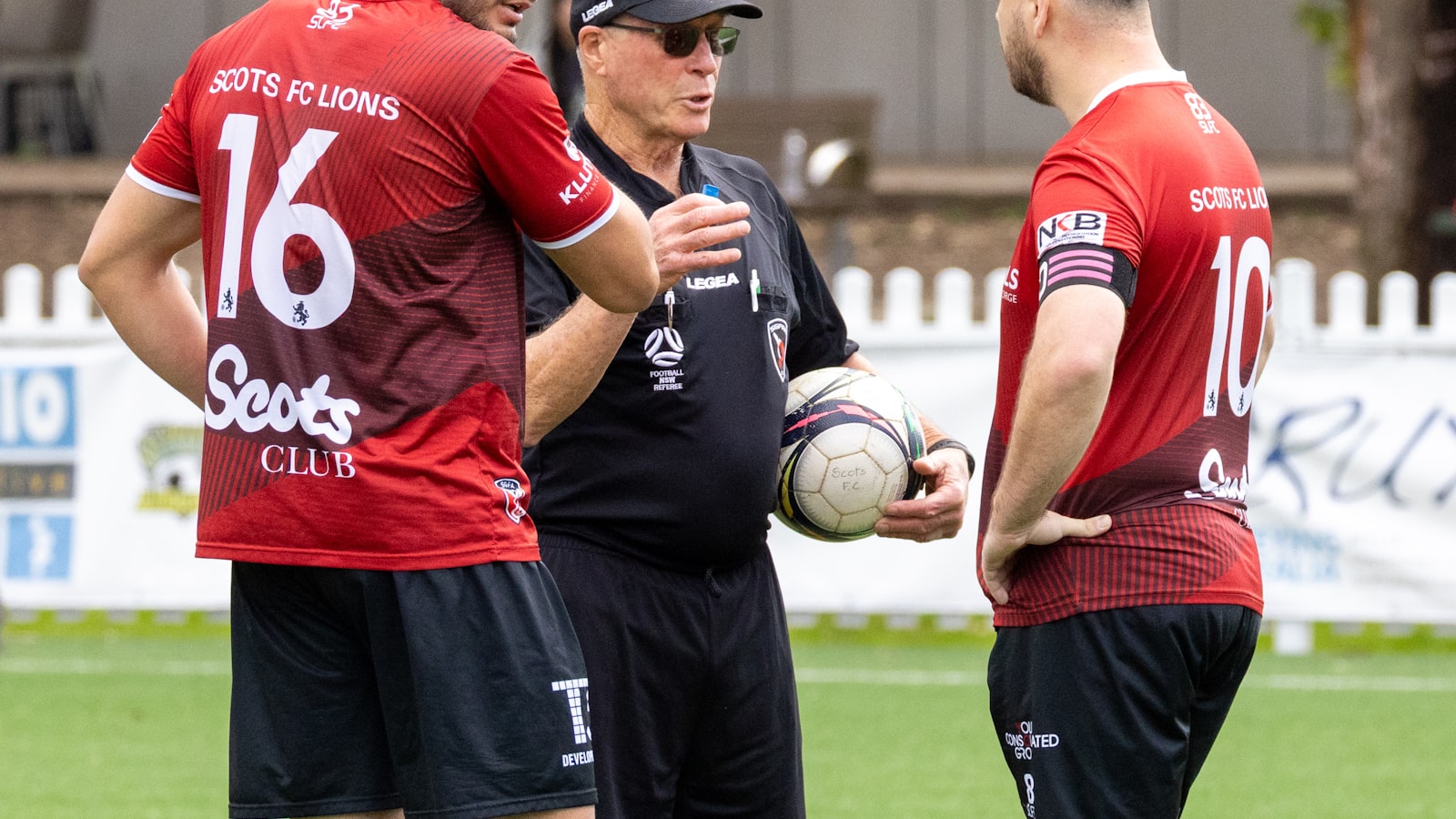
5. Captain-only protocol — enforcement teeth (2023-26)
IFAB ratified the captain-only protocol in 2023: only the team captain may approach the referee to ask about a contentious decision. Anyone else who does so risks a yellow card.
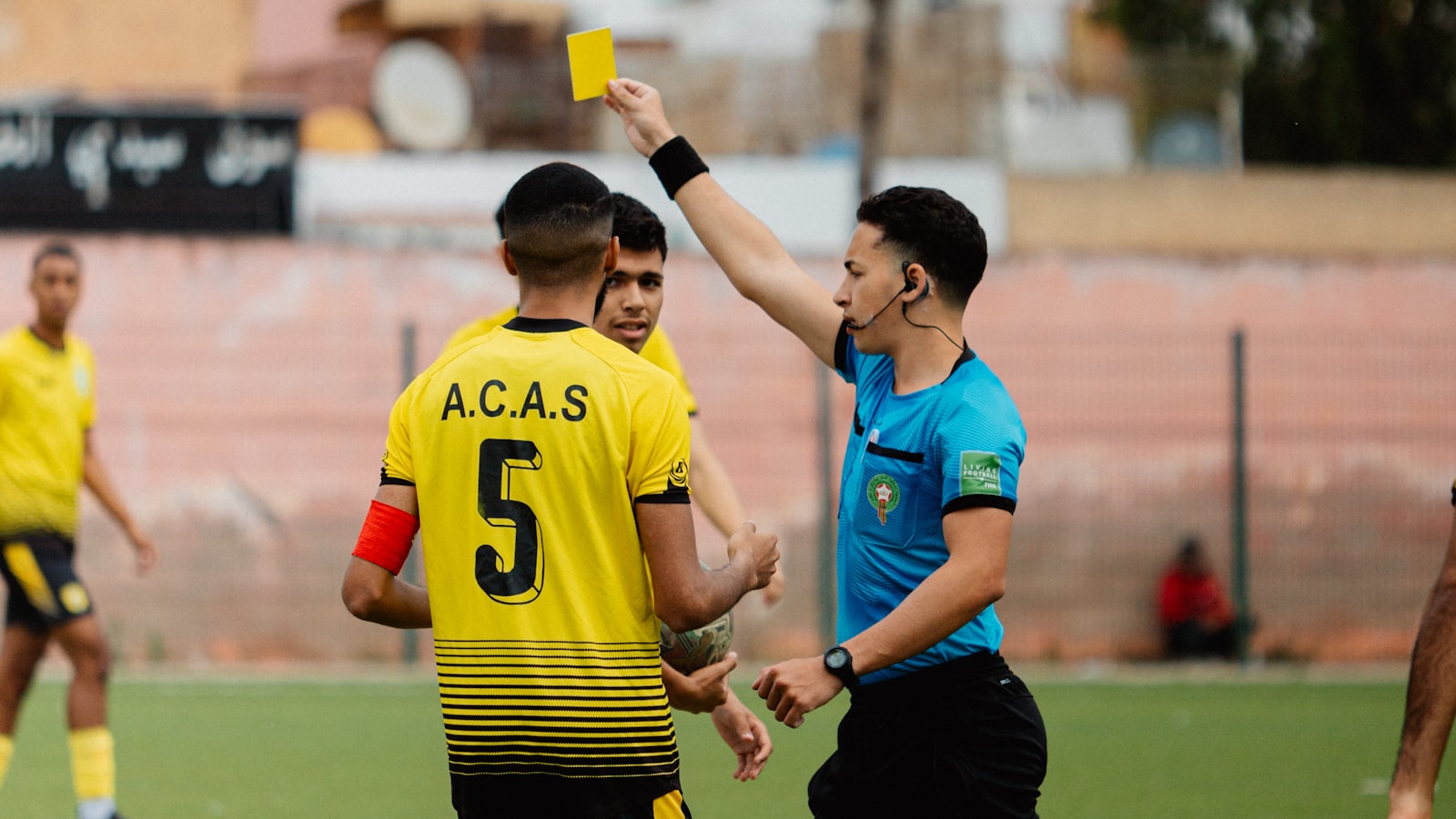
The 2023-24 trial revealed wildly inconsistent enforcement. Some referees were strict; others let it slide. For WC26, FIFA's referees committee has issued a clearer directive: on contentious calls within 10 seconds of the incident, anyone other than the captain who approaches will be booked. Captains who are themselves involved in the incident (a goalkeeper conceding a penalty, for example) may delegate to a senior outfield player, who then has the captain's privilege for that interaction.
In practice this means fewer crowds around the referee — and a higher card-rate for routine moments of player dissent.
Walk through a video review
Referee makes the initial call on the pitch. VAR can only intervene on four match-changing categories: goals, penalties, direct red cards, and mistaken identity (MOI).
6. SAOT speed and "armpit precision" (2022-26)
Covered in depth in our semi-automated offside 2026 piece, but worth noting in the change log. SAOT has moved from a 2022 pilot to the default at every WC26 venue, with three operational upgrades: multi-ball tracking, the armpit-precision calibration, and a sub-30-second in-stadium animation pipeline.
7. Body-camera trial — Premier League and Bundesliga (2024-26)
PGMOL began trialling body-worn cameras on Premier League referees in May 2024, initially with broadcast-only feeds (no VAR integration). The Bundesliga followed in August 2024. The trial has produced striking broadcast content — fans hearing a referee explain a call in real time has been universally praised — but has not yet been adopted by FIFA for WC26 centre referees.
As of 20 May 2026, FIFA has confirmed that the fourth official and reserve assistant referees at WC26 will wear body-cams in matches selected for the FIFA technical study, with footage retained for internal review only (no broadcast). Centre referees will not wear them at WC26. The expectation is full adoption by 2027, with broadcast integration possibly at the 2027 Women's World Cup.
This is covered in more depth in our refereeing tech 2026 piece.
8. The 8-second goalkeeper rule (2024)
IFAB tightened the long-standing rule limiting goalkeeper possession of the ball. The old wording allowed 6 seconds but was enforced almost nowhere. The 2024 amendment extends the limit to 8 seconds and pairs it with stricter enforcement: after 8 seconds, the opposing team is awarded a corner kick (changed from the previous indirect free-kick from the goal area, which was almost always ignored).
The change is a stoppage-time and ball-in-play reform as much as a VAR change — connected directly to the Collina directive. VAR cannot intervene on a missed 8-second call; it is on-field referee's discretion. But the rule's existence should reduce overall delay.
9. Counter-attack offside delay protocol (2024)
A subtle workflow change. Under the old protocol, an assistant referee who saw a possible offside on a counter-attack would raise the flag immediately, killing the play. Under the 2024 delay protocol, the AR is instructed to keep the flag down until the immediate scoring chance has concluded — and then either confirm offside (cancelling the goal/chance) or keep the flag down (confirming the goal stands).
The protocol applies only when the AR judges the offside to be tight enough that SAOT might overrule. It is essentially a deferral to the machine on close calls. Fans see it as an attacker running through to score; only later does the offside flag — or the SAOT graphic — appear.
10. Multi-camera dive detection (research stage, not deployed)
FIFA's innovation arm has spent the 2024-26 cycle prototyping a semi-automatic foul/dive detection system using the same 12-camera array as SAOT. The premise: track lower-leg contact dynamics and player-of-collision biomechanics to flag suspected dives.
The system has not been deployed at WC26 — it remains in research — but the cameras are in place. FIFA has confirmed footage from every WC26 match will be retained for post-tournament algorithm training. We may see this go live for the 2027 Women's World Cup in Brazil.
11. VAR overrules logged publicly (2025)
A transparency reform. From the 2025-26 season, FIFA-affiliated competitions are required to publish a weekly log of every VAR intervention — incident description, on-field decision, VAR recommendation, final decision, and the on-field referee's name. Premier League and La Liga were ahead of the curve here; the FIFA mandate brings the rest of the world in line.
At WC26, expect FIFA to publish a post-match VAR log within 24 hours of every fixture. The first big controversy of the tournament will have a paper trail.
12. AI offside-probability assistant (broadcast only, 2026)
Not a rule change, but a fan-experience one. Several WC26 host broadcasters — the BBC, ESPN, TUDN — have integrated an AI offside-probability overlay into their live broadcasts. On a possible offside, the broadcast displays a percentage probability that the system will rule offside, based on the same camera feeds SAOT uses (but a separate model). It is not part of the referee workflow. It is, however, going to be the source of the loudest fan-side reactions in real time.
- 1
Handball deliberate-movement clarification ratified
IFAB issues definitive guidance. PL and Bundesliga handball-penalty rates drop ~14% over the next season.
- 2
Captain-only protocol approved
Only captains may approach the referee on contentious decisions. Patchy first-year enforcement.
- 3
Pitchside announcement trial codified
Stadium PA announcement of VAR decisions begins formal trials in MLS, EFL, and CONCACAF competitions.
- 4
PGMOL body-cam trial begins
Premier League referees wear body-cams in broadcast-only feeds. Bundesliga follows in August.
- 5
Goalkeeper 8-second rule + encroachment retake protocol
IFAB tightens two long-ignored rules. Goalkeeper possession capped at 8s with corner-kick sanction; VAR can now flag encroachment for penalty retakes.
- 6
FIFA Club World Cup 2025 — pitchside announcements live
First major FIFA competition to deploy mandatory stadium PA announcements after VAR reviews.
- 7
Coach challenge system shelved
Following mixed results at U20 tournaments, FIFA confirms no coach challenge at WC26.
- 8
WC26 referee briefing in Frankfurt
Captain-only enforcement tightened, pitchside announcement protocol made mandatory, fourth-official body-cam study confirmed.
- 9
WC26 kicks off
All 12 changes operational from the opener at Estadio Azteca.
The change you will hear about most
If you only remember one change between 2022 and 2026, make it the pitchside announcement protocol. Every other change is operational — fans see the result, not the mechanism. The pitchside announcement is the one fans hear and watch in real time, in the stadium and on broadcast.
Picture it: a possible handball goal in a Round of 16 match. The referee is at the monitor for 90 seconds. The crowd is murmuring. The referee jogs back to the centre circle, picks up a mic clipped to the corner-flag pole, and says: "Following a review for a possible handball by number 9 in the build-up to the goal, the on-field decision of goal is overturned. Final decision: no goal."
That is a transparency moment unprecedented in World Cup football. It will shape how fans relate to VAR in 2026.
“The criticism of VAR has always been about transparency. We have spent four years addressing it. Pitchside announcements, public logs, in-stadium animations of every offside — by the end of WC26, no fan should leave a stadium without understanding why a call was made. They may disagree. But they should understand.
”
A guided spot-the-call quiz
To put the new rules to the test, here are five scenarios. Decide before the explanation whether VAR would overrule.
VAR 2026 — would you overrule?
- 1. A defender slides to block a shot. The ball deflects off his trailing arm, which is extended for balance. Penalty awarded by the referee. VAR check.
- 2. Goalkeeper saves a penalty. Replay shows both feet were 40 cm off the line at the moment of contact. VAR check.
- 3. On a counter-attack, the attacker rounds the goalkeeper and scores. The assistant referee did not flag. Replay shows the attacker's shoulder was 3cm ahead of the second-last defender at the moment of the through-ball.
- 4. A player is shown a yellow card for a heavy challenge. Two minutes later, replay angles show it was studs-up and high. VAR has not yet intervened. Can VAR escalate?
- 5. Goalkeeper holds the ball for 11 seconds. Referee gestures but does not blow the whistle. Goalkeeper releases the ball. Play continues. Can VAR intervene?
What stays the same in spirit
Three things that have not changed and should not change before WC26:
- VAR is the assistant, not the referee. The on-field referee makes every final call. The 2026 rule changes have strengthened this, not weakened it.
- Clear and obvious error remains the threshold. Every tweak to handball, encroachment, or offside still operates inside the IFAB-defined standard.
- The fans are the audience, not the participants. No coach challenge, no fan vote, no in-stadium replay control. VAR is officials-only.
For everything connected to the new toolkit — body-cams, AI assistants, in-ear comms — see our referee toolkit 2026 piece. For the offside-specific deep dive, see semi-automated offside 2026. For the time-keeping context, see stoppage-time reform 2026.
Frequently asked
What is the biggest VAR change between 2022 and 2026?
Has the handball rule changed for WC26?
Will referees wear body cameras at WC26?
Is there a coach challenge at WC26?
What is the captain-only protocol?
Can VAR review yellow cards at WC26?
What is the new 8-second goalkeeper rule?
Will fans know why VAR made a call?
Sources (5)
- IFAB — Annual general meeting minutes 2023-25accessed 2026-05-20
- FIFA — Refereeing innovationsaccessed 2026-05-20
- BBC Sport — VAR rule changes explaineraccessed 2026-05-20
- The Athletic — Pierluigi Collina interviewsaccessed 2026-05-20
- PGMOL — Body-worn camera trialaccessed 2026-05-20
Sources (5)
- IFAB — Annual general meeting minutes 2023-25accessed 2026-05-20
- FIFA — Refereeing innovationsaccessed 2026-05-20
- BBC Sport — VAR rule changes explaineraccessed 2026-05-20
- The Athletic — Pierluigi Collina interviewsaccessed 2026-05-20
- PGMOL — Body-worn camera trialaccessed 2026-05-20
You might also like