Mexico vs USA vs Canada: Which Host Hits Hardest at WC26?
Atmosphere, weather, transit, ticket prices, fan-fest culture — a direct comparison of the three WC26 hosts and what each one actually delivers when the tournament arrives.
The 2026 World Cup is eleven matches in Canada, thirteen in Mexico, eighty in the United States, but that headline split flattens almost everything that matters. Each of the three host countries is delivering a different tournament — different weather, different atmosphere, different transit, different price ceiling, different relationship between the local game and the international one. The question for a travelling fan, or a TV viewer trying to figure out which group games are worth setting the alarm for, is which one plays best.
Spoiler: there is no single answer. Mexico delivers the loudest atmospheres, the cheapest week, and the only stadium hosting its third World Cup. The United States delivers the deepest match slate, the slickest broadcast and the most aggressive ticket curve. Canada delivers the most boutique-feeling experience — fewer matches, smaller venues, a tournament-as-event quality the southern hosts can't quite reproduce. Here is the working comparison.
The headline split
The bracket asymmetry is the first thing to internalise. Canada and Mexico get only the group stage and round of 32; once the tournament reaches the round of 16, every remaining match is played in the United States. That has consequences for atmosphere, ticket prices, and the type of fan in each venue. The Canadian and Mexican fixtures are the most local matches of the tournament — drawn from the host group, opening windows, friendlier kickoffs. The American fixtures span the full slate, from the cross-border Group D matches to the final.
Stadiums: where atmosphere comes from
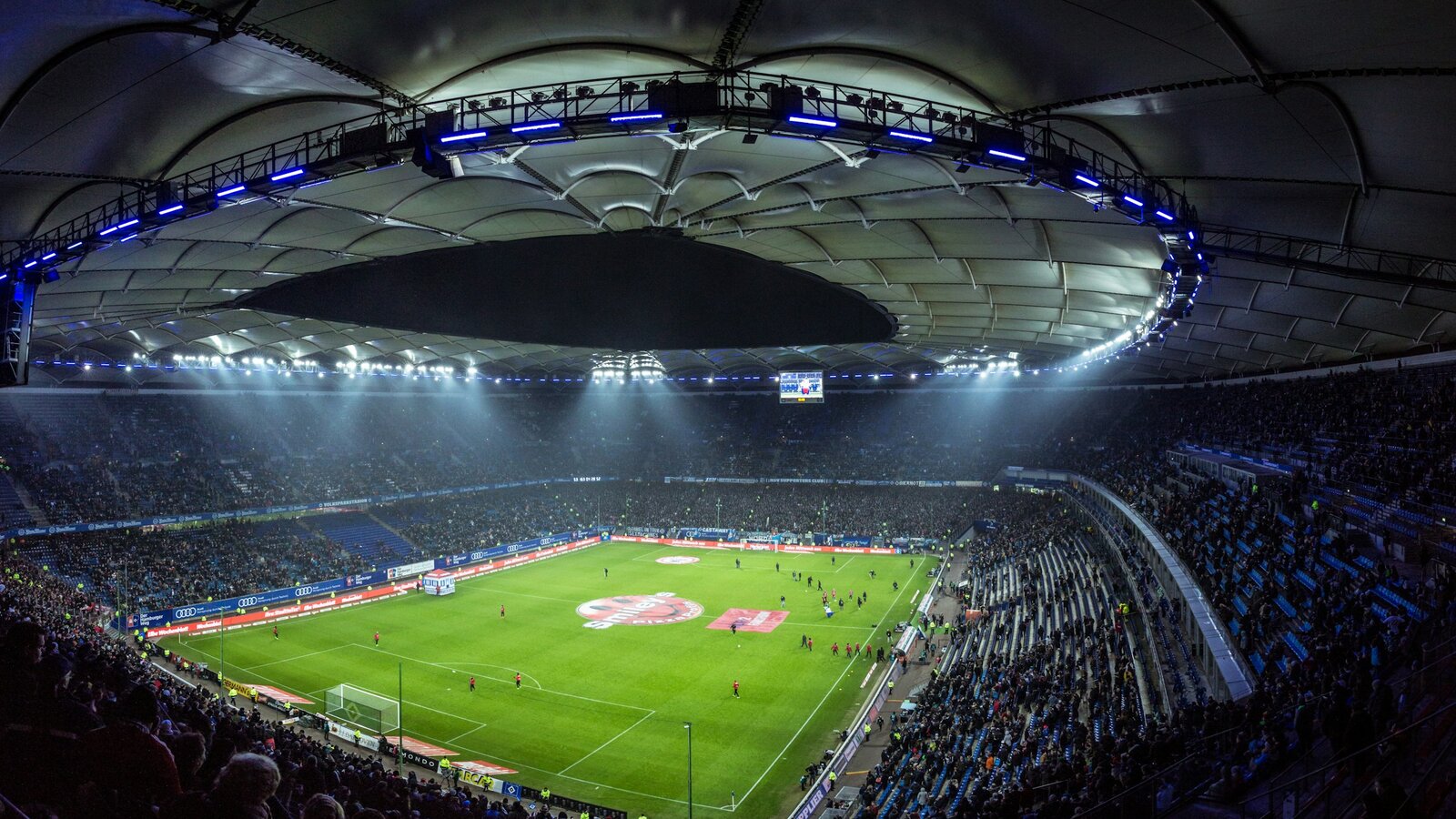
The 16 host stadiums sit on a spectrum from "soccer-specific intimacy" (BMO Field, 45,000) to "NFL-scale spectacle" (MetLife, 82,500). The Mexican triumvirate sits in the middle by capacity but at the top of the atmosphere rankings — these are stadiums where the local game already fills the building every week.
16 WC26 Host Stadiums
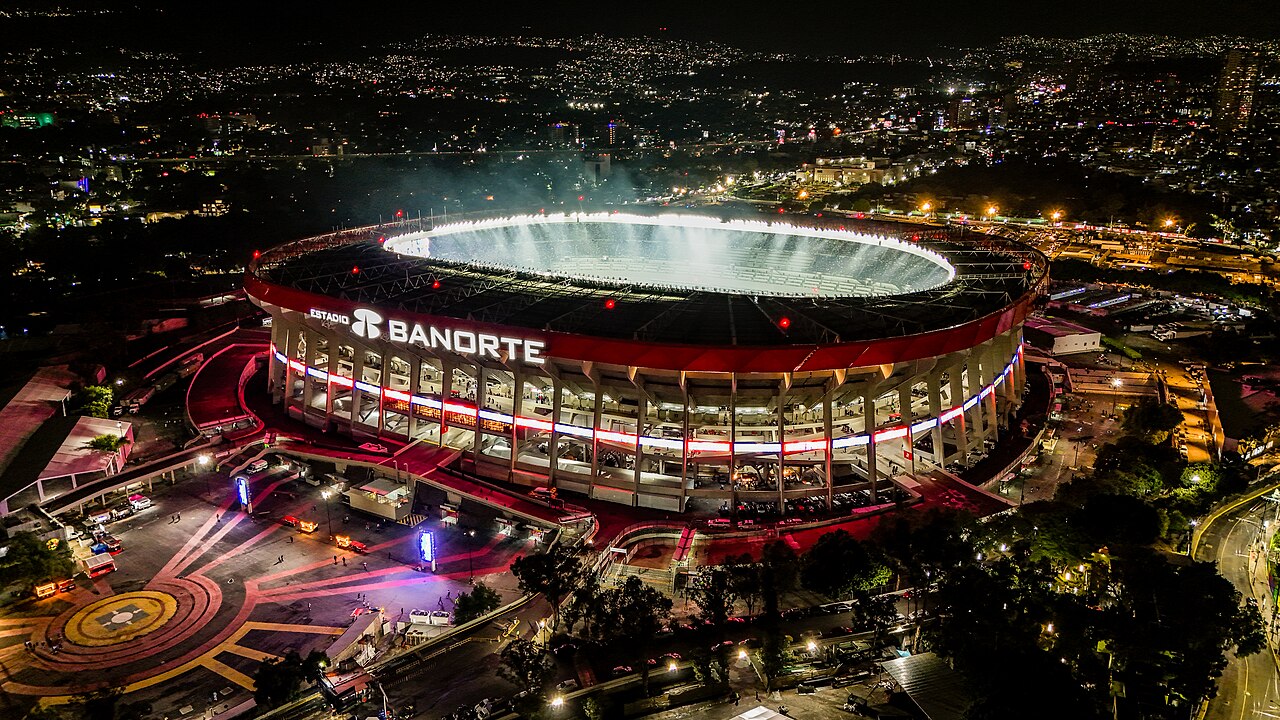
Estadio Azteca. This is the only venue at the tournament that has hosted a previous World Cup final — in fact, two of them (1970 and 1986). The renovations completed in early 2026 retained the bowl shape and the 87,000-plus capacity. The atmosphere is the loudest in the host roster by general consensus among visiting writers; every World Cup oral history mentions it.
MetLife. The biggest stadium hosting matches in 2026 outside the Azteca. It also hosts the final on 19 July. The atmosphere is genuinely corporate-feeling in the lower bowl — NFL pricing logic applies — and the swampy New Jersey humidity in mid-July is a real factor. American fans who attended Copa América 2024 fixtures there will recognise the tradeoff: huge production, sub-Azteca acoustics.
BMO Field. Toronto's home of the Canadian men's team and Toronto FC. The smallest WC26 venue by capacity, a soccer-specific stadium expanded for the tournament. Reporting from The Athletic's pre-tournament walkthrough described it as the most "European-feeling" venue in the host set — single-tier stands close to the touchline, no NFL sightline compromises.
BC Place. Vancouver's covered MLS-and-rugby venue, the only closed-roof Canadian stadium. Big-event production from the 2010 Olympics, climate certainty no other host venue can match.
The pattern is clear: Mexico is the loudest, Canada is the most intimate, USA is the most varied — from the open-air swampy heat of Hard Rock Stadium in Miami to the climate-controlled cool of SoFi Stadium in Los Angeles.
Weather: the make-or-break variable
The Mexican host cities — Mexico City (2,240m altitude), Guadalajara (1,566m) and Monterrey — all sit in different climate zones from each other, and from any other host venue. Mexico City's June afternoons are mid-20s and surprisingly mild for a tournament city at that latitude; Monterrey is among the hottest venues at the tournament, routinely above 30°C through the group stage.
Tournament-window temperatures
*Climate normals, not forecasts.*
| Venue | Wk 1 Jun 11–17 | Wk 2 Jun 18–24 | Wk 3 Jun 25–Jul 1 | Wk 4 Jul 2–8 | Wk 5 Jul 9–15 | Wk 6 Jul 16–19 |
|---|---|---|---|---|---|---|
| MetLife Stadium | 25° | 27° | 28° | 29° | 30° | 29° |
| SoFi Stadium | 23° | 24° | 25° | 26° | 27° | 27° |
| AT&T Stadium | 33° | 34° | 35° | 36° | 37° | 37° |
| BMO Field | 22° | 23° | 24° | 25° | 26° | 26° |
| BC Place | 18° | 19° | 21° | 22° | 23° | 23° |
| Estadio Azteca | 23° | 23° | 24° | 24° | 23° | 22° |
| Estadio Akron | 24° | 24° | 24° | 23° | 22° | 22° |
| Estadio BBVA | 29° | 30° | 31° | 30° | 30° | 29° |
The US slate is the most weather-variable. Lumen Field in Seattle and SoFi in Los Angeles are the two coolest American venues. AT&T Stadium in Dallas is the hottest — and the retractable roof means matches will often be played with the roof closed in air conditioning. Hard Rock Stadium in Miami sits at the most humid end, and the kickoff times for matches there have been arranged accordingly.
The Canadian venues are consistently mild. BMO Field's June-July averages sit in the low-to-mid 20s Celsius; BC Place is even cooler. Per our climate analysis, if you want the most pleasant weather attendance experience, the Canadian and Cascadia (Seattle, Vancouver) venues are the safest bets.
Costs: the matrix that tells the real story
A direct cost comparison across the three hosts. Hotel prices are typical four-week-out booking ranges from May 2026 data, USD-denominated to make the comparison legible.
Cheapest seat by stage and city
| Stage | NY/NJ | LA | Dallas | MX City | Monterrey | Toronto | Vancouver |
|---|---|---|---|---|---|---|---|
| Group (mid-week) | $310 | $280 | $240 | $180 | $170 | $260 | $280 |
| Group (weekend) | $420 | $380 | $320 | $240 | $220 | $350 | $380 |
| R32 | $520 | $470 | $410 | $310 | $280 | $430 | $480 |
| R16 | $640 | $580 | $510 | $380 | $340 | $540 | $600 |
| QF | $820 | $740 | $660 | $470 | $410 | $700 | $780 |
| SF | $1,050 | $950 | $850 | $580 | n/a | $880 | n/a |
| Final | $1,850 | n/a | n/a | $1,050 | n/a | n/a | n/a |
The pattern from the matrix:
- Mexico is materially cheaper than the US and Canada at every stage — for hotels, food, ground transit, and tickets in the secondary market. A week in Mexico City for the group stage runs at roughly two-thirds the cost of a comparable week in New York or Los Angeles.
- The US is the most expensive headline ticket for the final-stage matches. The MetLife final pricing has rewritten what is possible at a World Cup; resale market floors in early May tracked above $5,000 according to The Athletic's ticket reality check.
- Canada sits in the middle, but with a Toronto and Vancouver hotel-cost level closer to US peers than Mexican ones.
For a fan trying to follow a single group, the cheapest itinerary in Group A, B or C (the Mexican groups) is dramatically cheaper than the equivalent in any American group.
Transit: the boring but decisive comparison
Mexico City's Metro is the most extensive in the host roster and runs to within a 20-minute walk of Estadio Azteca. Toronto has the TTC subway and streetcar network; BMO Field is on the streetcar line. Vancouver's SkyTrain runs to BC Place. New York / New Jersey has the NJ Transit rail link to MetLife (functional but capacity-limited). Los Angeles has the Metro K Line to SoFi, finally usable since the 2024 extension. Dallas's DART system does not reach AT&T Stadium — fans need to drive or rideshare.
The pattern: public transit access to host stadiums favours the older, denser cities (Mexico City, Toronto, New York), while the newer American Sun Belt venues (AT&T, Mercedes-Benz, NRG, GEHA Field) are car-first builds. This is the kind of thing that does not show up on a TV broadcast but defines the actual fan experience.
Fan-fest culture: where the country shows up
Each host federation has committed to at least one large official fan fest per host city, plus secondary sites. The flavour differs sharply:
- Mexico City — Zócalo. The main square has hosted Mexico's previous tournament parties (2018 and 2022 included). Capacity for an Estadio Azteca-adjacent match watch could touch six figures. The Athletic's preview called it the single biggest fan-gathering point at the tournament.
- Guadalajara — Plaza de la Liberación. Mexico's second-tier party, historically rowdier on Mexico matchdays.
- Toronto — Nathan Phillips Square. Toronto's main civic square, with a long history of hosting World Cup screenings; Italian and Portuguese diaspora communities have made these among the most-attended outside-Europe screenings in past tournaments.
- Vancouver — Larwill Park & PNE Grounds. Confirmed via Destination Vancouver for the tournament.
- New York — Times Square, Liberty State Park, and Prospect Park. Multiple sites, fragmented.
- Los Angeles — Grand Park. Civic centre adjacent to the courthouse; FIFA Fan Festival site confirmed in 2025.
- Chicago — Grant Park. The official US fan fest of the highest billing per FIFA's 2024 announcement, despite Chicago not being a host city.
- Dallas — Klyde Warren Park. Confirmed via Visit Dallas.
- Toronto / Vancouver / Mexico-only matches will be the screenings that draw the biggest crowds, in the way 2002 Korea/Japan and 2010 South Africa screenings did for those hosts.
The cultural anchor is in Mexico, where the tournament arrives in a country that already treats the World Cup as a national civic event. The US's relationship with the World Cup is real and growing but newer — fan-fest attendance in 2022 was a step change from 2018, and 2026 will be another. Canada's fan-fest culture is more fragmented but the multilingual diaspora factor pushes it up.
Visa and border frictions: the quick recap
We've broken this down in detail in the border-crossings piece, but the short version:
- Most non-North American fans need three documents — ESTA for USA, eTA for Canada, FMM-on-arrival for Mexico — to attend matches in all three.
- No FIFA Fan ID replaces any of these. The match ticket helps with priority visa scheduling at some consulates; it does not waive any admissibility requirements.
- CBP, CBSA and INM have each updated operational protocols for the tournament window without changing core policy. Expect longer-than-normal queues at peak crossings.
The bracket implication
Because the bracket sends every R16-and-beyond match to a US stadium, the fans who get the most variety are those who can be flexible across the group stage. A typical "live the World Cup" itinerary might look like:
- Week 1: Mexico — see the opener at the Azteca, ride the high.
- Week 2-3: Canada or western US — Toronto, Seattle, LA, Vancouver. Cooler weather, R32 buildup.
- Week 4 onwards: Eastern / central US — the bracket runs through AT&T, MetLife, Mercedes-Benz, AT&T again, and back to MetLife for the final.
The fans who try to do the whole tournament from a single country will get a deep but partial experience. The US-only itinerary delivers the entire knockout stage; the Mexico-only itinerary delivers maximum atmosphere for two weeks; the Canada-only itinerary delivers a focused, smaller-scale tournament. Each is a different World Cup.
Final scorecard
Frequently asked
Which host has the best atmosphere?
Which host is the cheapest for a week-long visit?
Where will the final be played?
Which host has the best public transit to stadiums?
Which host has the most matches?
Is Mexico City's altitude an issue at the Azteca?
Where is the best place to watch the final if I'm not at the stadium?
Sources (8)
- FIFA — Canada, Mexico, USA 2026 hubaccessed 2026-05-20
- Destination Torontoaccessed 2026-05-20
- Visit Mexico — Secturaccessed 2026-05-20
- Brand USA — Visit The USAaccessed 2026-05-20
- OAG aviation reportsaccessed 2026-05-20
- The Athletic — WC26 city guidesaccessed 2026-05-20
- Reuters — WC26 logisticsaccessed 2026-05-20
- Associated Press — World Cup 2026 hubaccessed 2026-05-20
Sources (8)
- FIFA — Canada, Mexico, USA 2026 hubaccessed 2026-05-20
- Destination Toronto / Tourism Torontoaccessed 2026-05-20
- Brand USA — Visit The USAaccessed 2026-05-20
- Visit Mexico — Secturaccessed 2026-05-20
- OAG — North American aviation capacity reports 2026accessed 2026-05-20
- The Athletic — WC26 city guidesaccessed 2026-05-20
- Reuters — WC26 host city logisticsaccessed 2026-05-20
- Associated Press — World Cup 2026 hubaccessed 2026-05-20
You might also like