Group of Death 2026: Which Group Is Toughest?
We score every World Cup 2026 group on FIFA-ranking strength, depth, recency and tactical pedigree. The top of the table is closer than you think.
The world cup 2026 group of death title has more candidates than usual. With twelve groups instead of eight, the upper tier of teams gets sprayed across the draw — and yet, somehow, three groups have ended up with a top-ten Pot 1 side, a serious Pot 2 contender and a Pot 3 team that has either qualified for the first time or carries memory of recent World Cup damage. Let us sort them properly.
This piece scores every group, compares the top three contenders side by side, walks through what a "group of death" has historically meant, and explains why the 48-team format makes the title harder to claim than ever before.
What is a "group of death"?
There has never been a fixed definition. Historically the phrase has meant any combination of two or more of:
- Two or more pre-tournament top-ten teams in the same group.
- A defending champion drawn with a former champion.
- A "no easy game" group — no team obviously available to be beaten.
- A continental rivalry (e.g. two CONMEBOL sides in the same group).
The most famous examples are widely agreed:
- 1982 Group 3 — Argentina (defending champions), Belgium, Hungary and El Salvador.
- 1986 Group E — West Germany, Uruguay, Scotland and Denmark, where three of four were European powers and Denmark were the cult shock favourites.
- 1990 Group F — England, Netherlands, Republic of Ireland and Egypt — three sides who all knocked spots off each other.
- 1994 Group E — Italy, Norway, Mexico, Ireland — every team finished on four points.
- 2002 Group F — Argentina, England, Sweden, Nigeria.
- 2014 Group D — Uruguay, Costa Rica, England, Italy — England and Italy both went home group-stage.
If you want the historical fingerprint of a "real" group of death, look for: two top-tier favourites, a third side that has won knockout matches in the last two cycles, and a fourth side that has caused a recent shock. By that standard, here is how Canada/Mexico/USA 2026 looks.
Score every group at once
Below is a heuristic strength score per group. We summed each team's FIFA ranking points (proxied by inverse-rank weight — top of the world ranks more heavily) and added a "recent knockout damage" bonus for teams that reached at least the Round of 16 in 2018 or 2022.
Which 2026 group is the cruellest?
Higher inverse rank (lower FIFA #) = harder. Titles weight history. Spread rewards unpredictability.
Illustrative draw. Tap a group to compare against the rest.
The 12 groups, ranked
We assigned each group a difficulty band from S (group of death) down to C (qualifier-friendly). Rankings shown are the FIFA April 2026 numbers used at the draw. Playoff winners with unverified post-playoff ranks are flagged.
| Group | Pot 1 (rank) | Pot 2 (rank) | Pot 3 (rank) | Pot 4 (rank) | Band |
|---|---|---|---|---|---|
| D | USA (14) | Australia (26) | Paraguay (39) | Türkiye (UEFA Path C) | S |
| J | Argentina (2) | Austria (24) | Algeria (~35) | Jordan (66) | S |
| L | England (4) | Croatia (10) | Panama (30) | Ghana (72) | S |
| I | France (3) | Senegal (19) | Norway (29) | Iraq (ICP Path 2) | A |
| C | Brazil (5) | Morocco (11) | Scotland (36) | Haiti (84) | A |
| H | Spain (1) | Uruguay (16) | Saudi Arabia (60) | Cape Verde (68) | A |
| F | Netherlands (7) | Japan (18) | Tunisia (40) | Sweden (UEFA Path B) | B |
| G | Belgium (8) | Iran (20) | Egypt (34) | New Zealand (86) | B |
| K | Portugal (6) | Colombia (13) | Uzbekistan (50) | DR Congo (ICP Path 1) | B |
| E | Germany (9) | Ecuador (23) | Ivory Coast (42) | Curaçao (82) | B |
| B | Canada (27) | Switzerland (17) | Qatar (51) | Bosnia and Herzegovina (UEFA Path A) | C |
| A | Mexico (15) | South Korea (22) | South Africa (61) | Czechia (UEFA Path D) | C |
The S band — our group-of-death candidates — has three groups. Let us break them down.
The case for Group D as group of death
USA (14) – Australia (26) – Paraguay (39) – Türkiye (UEFA Path C)
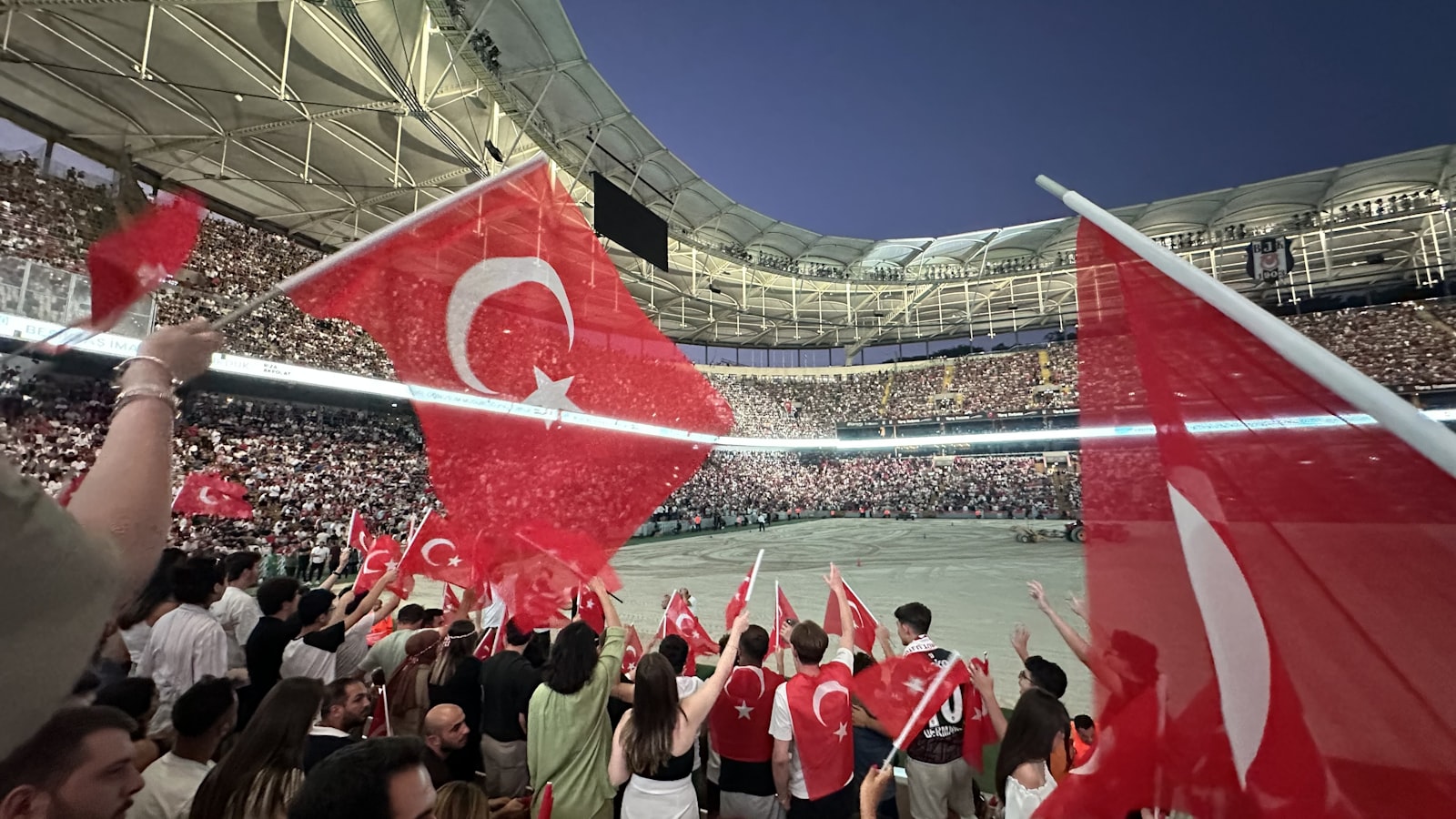
Group D is the most balanced top to bottom of any group in the tournament. The United States as host, ranked fourteenth, is the favourite but not by miles. Australia at twenty-sixth has reached the Round of 16 in two of the last three World Cups. Paraguay returns to a World Cup with their familiar street-fight pragmatism and a CONMEBOL-honed defence. Türkiye — having survived the UEFA playoff Path C — is a chaos team: capable of running over anyone in form and going meekly out when not.
The reasons Group D wins our top spot:
- No obvious whipping boy. Every team has won a competitive senior match against a top-twenty side in the last 24 months.
- Style clash. US press vs Australian directness vs Paraguay's low block vs Türkiye's transitional bursts. Tactical chess every match.
- Host pressure on the US. Home advantage cuts both ways — fan expectations make a stumble more punishing.
The case for Group J as group of death
Argentina (2) – Austria (24) – Algeria (~35) – Jordan (66)
Argentina is the defending champion and ranked second in the April 2026 list. That alone would not make this a group of death — but the combination of Austria (a top-25 European side that has overperformed every cycle since 2020), Algeria (a CAF team that has knocked out a defending champion before — see 1982) and Jordan (a debutant with a hardened qualification campaign) is heavier than it looks.
The reasons Group J is right behind Group D:
- Argentina cannot rest. A defending champion can usually clinch top spot with two wins and a draw. Here, Austria will press for 90, Algeria will run for 90, and Jordan's defensive shape held up across AFC qualifying.
- Hand of God echo. Argentina vs an African side at a World Cup has a non-trivial upset rate.
The case for Group L as group of death
England (4) – Croatia (10) – Panama (30) – Ghana (72)
England and Croatia in the same group is the headline. Two of the last three World Cup runs have seen these sides eliminate each other or come close — the 2018 semi-final being the obvious reference. Panama is a CONCACAF side with World Cup experience, and Ghana, though their April 2026 FIFA rank (72) is well below the repo's outdated 39, has been one of the most aggressive over-performers in CAF qualifying.
Where Group L falls just short of D and J in our scoring: Panama and Ghana, while dangerous, do not have the recent senior-team scalps that Australia and Algeria carry. But the top-two ceiling is the highest of any group in the tournament.
Side-by-side comparison
A reminder on methodology: scores combine inverse-rank weight, recent World Cup knockout appearances (R16+, 2018 and 2022), and confederation diversity. They are useful for ranking, not as forecasts.
Why expanding to 48 makes the title harder
In a 32-team World Cup, the math was simple: 32 teams ÷ 8 groups = a meaningful concentration of top-tier sides in some group. With 48 teams across 12 groups, the average group is shallower because the pool is wider. You get more groups with one strong Pot 1 team, a competent Pot 2, and a Pot 3 / Pot 4 that may be a debutant.
But the new Round of 32 changes incentives:
- Pot 1 teams can afford to draw a match without panicking, because second place still goes through, and even third place advances eight times in twelve.
- Pot 2 and Pot 3 teams are calibrated to "win one, hold one" to grab a third-place slot.
- That means the competitive temperature of the group stage drops slightly — except in groups where two top-twenty sides are paired.
In other words: groups with a clear hierarchy will play less intense football. Groups D, J and L — where no team can afford a slow start — are where the real group-of-death intensity will live.
Pot 4 wild cards
Pot 4 is where the surprises usually come from. In 2022 it was Morocco. In 2018 it was Iceland (who drew Argentina). This time we have four debutants in Pot 4 — Cape Verde, Curaçao, Jordan, Uzbekistan — and four playoff winners with unverified post-playoff rankings (Bosnia and Herzegovina, Czechia, Sweden, Türkiye).
A few that may punch above expectations:
- Türkiye (Group D) — top-tier attacking talent across the squad, group ceiling is "win it" if the underdogs cooperate.
- Curaçao (Group E) — Caribbean side with a population of around 155,000. Pure narrative.
- Sweden (Group F) — survived a UEFA playoff path; capable of going deep if Isak is at his ceiling.
- Cape Verde (Group H) — first World Cup, CAF qualifying group winners, dangerous on set pieces.
A historical lens on the "groups of death"
How have past groups of death played out? The pattern is humbling for predictors:
- 1986 Group E — All four teams finished within a point of each other. Denmark won the group.
- 1994 Group E — Mexico, Ireland, Italy, Norway all finished on four points. FIFA had to use goals scored for the first time.
- 2002 Group F — Sweden won, Argentina (favoured to win) went home group stage.
- 2014 Group D — Costa Rica won, Italy and England both went home.
Translation: the strongest group in a World Cup almost never ends with the seeded favourite topping it. If you are filling in a bracket, treat the Pot 1 team in your group of death as a coin flip to win the group, not a lock.
The bottom-of-table groups
For completeness, the easiest groups (Band C) by our score are:
- Group A — Mexico hosts a group with South Korea (22), South Africa (61), Czechia. Mexico's path to the Round of 32 is the friendliest of any host nation.
- Group B — Canada (27) has the lowest Pot 1 rank of any host; Switzerland (17) is the dark horse and may actually win the group.
If you are predicting "easy" advances, this is where they live.
Frequently asked
Which is the group of death at World Cup 2026?
Why is Group D considered the group of death?
Is Group J Argentina's group of death?
Why does Group L not top the list?
How does the new 48-team format affect group-of-death intensity?
Where is Group of Death history strongest?
Which Pot 4 team is most likely to spring an upset?
Sources (5)
- FIFA World Ranking — Menaccessed 2026-05-19
- Wikipedia — 2026 FIFA World Cup drawaccessed 2026-05-19
- FIFA — Final Draw resultsaccessed 2026-05-19
- Wikipedia — 2026 FIFA World Cupaccessed 2026-05-19
- Wikipedia — 2026 FIFA World Cup qualificationaccessed 2026-05-19
Sources (4)
- FIFA World Ranking — Men (Apr 2026 edition)accessed 2026-05-19
- Wikipedia — 2026 FIFA World Cup drawaccessed 2026-05-19
- FIFA — Final Draw resultsaccessed 2026-05-19
- Wikipedia — 2026 FIFA World Cupaccessed 2026-05-19
You might also like