The New 48-Team Format Explained (with Live Simulator)
How twelve groups of four feed into a brand-new Round of 32, why FIFA added a knockout round instead of byes, and what it means for fans, teams and broadcasters.
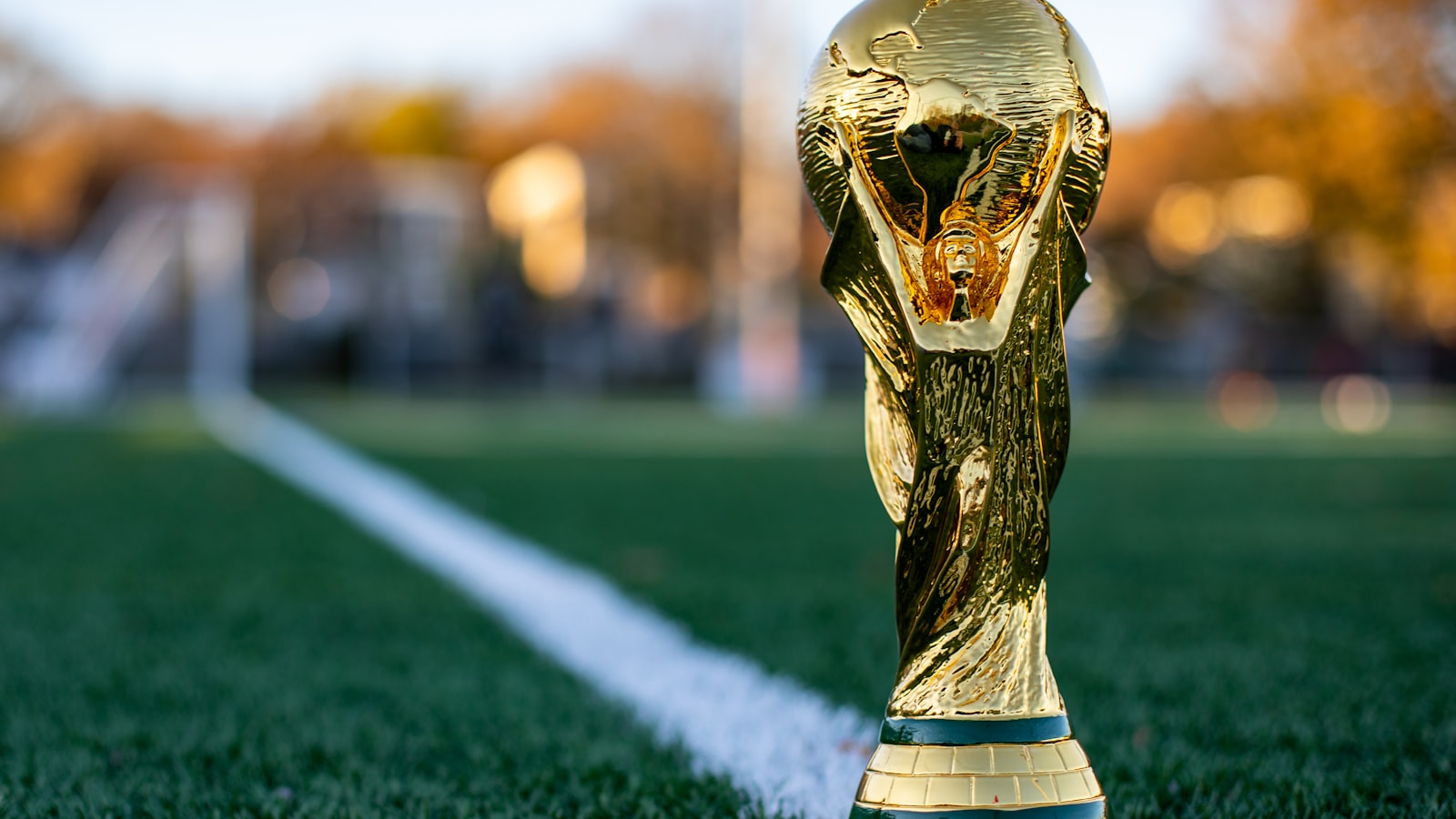
The world cup 48 teams format is the single most consequential rule change in the tournament's recent history. Forty-eight national sides. Twelve groups of four. A brand-new Round of 32. One hundred and four matches in thirty-nine days. After more than two decades of the familiar eight-group, sixteen-knockout shape, FIFA has rewritten the bracket.
This post explains, step by step, how the new format actually works, why FIFA chose a Round of 32 over a 24-team bracket with byes, and what the upgrade means for the teams, the broadcasters, the host cities and you.
The shape of the tournament in one paragraph
Forty-eight teams are placed into twelve groups of four, lettered A through L. Each team plays three group-stage matches between June 11 and June 27, 2026. The top two from each group plus the eight best third-placed teams advance — thirty-two teams in total. Those thirty-two play in a new Round of 32 between June 28 and July 3, then a Round of 16 (July 4 – 7), Quarter-finals (July 9 – 11), Semi-finals (July 14 – 15), a third-place play-off on July 18 and the Final on July 19 at MetLife Stadium.
That is 104 matches total — up from 64 in 2022 — and 39 days of football, up from 29 in Qatar.
Group stage: twelve groups of four
The group stage works exactly like 2022 within each group:
- Each team plays the other three teams in its group once.
- Three points for a win, one for a draw, none for a loss.
- Tiebreakers: points, then goal difference, then goals scored, then head-to-head between tied teams, then a sequence of further FIFA tiebreakers down to fair-play points and ultimately a drawing of lots.
What is different is how many groups there are and how many teams advance. Twelve groups means twelve group winners and twelve runners-up — twenty-four teams — automatically through.
The third-placed-team mechanic
This is the new and slightly counter-intuitive part.
After every group has finished its three matches, FIFA pulls the twelve third-placed teams and ranks them against each other using the same tiebreaker chain (points, GD, goals scored, fair play). The top eight of those twelve also advance to the Round of 32.
That means four teams that finish third in their group go home, and eight teams that finish third advance. Which third-placed teams go through depends on results across the whole tournament, not just within a group — so the mechanic only resolves after the last group matches are played.
If the last UEFA EURO and the 1986 / 1990 / 1994 World Cups (all of which used a similar 24-team bracket) are any guide, third-placed teams tend to make trouble in their first knockout match. They are wounded, often unfancied, sometimes a tactically-disciplined unit that scraped four points across three matches.
Round of 32: the brand-new knockout round
The Round of 32 is the headline addition. Sixteen matches between June 28 and July 3, played as one-leg, winner-advances ties (with extra time and penalties if level after 90 minutes).
Why a Round of 32, and not a 24-team bracket with byes for the top eight? FIFA's reasoning, in practice:
- TV inventory. Forty extra matches across the tournament (64 → 104) is sold globally as the headline product upgrade. Byes do not add inventory.
- Competitive integrity. Byes would create asymmetric rest gaps, advantaging some teams over others before knockouts even start.
- Bracket symmetry. A pure Round of 32 produces a clean bracket tree (32 → 16 → 8 → 4 → 2 → 1) without anomalies.
- Home-host scheduling. A symmetric 32-team bracket lets FIFA distribute matches more evenly across the sixteen venues, which is a logistical hard constraint in a tri-host tournament.
The downside, per critics, is that the tournament gets longer (39 days vs 29) and that group-stage drama drops: a team that loses two matches can still advance.
Quarter-finals onwards
From the Round of 16 onwards, everything looks like a normal World Cup:
| Stage | Dates | Matches |
|---|---|---|
| Round of 16 | July 4 – 7 | 8 |
| Quarter-finals | July 9 – 11 | 4 |
| Semi-finals | July 14 – 15 | 2 |
| Third-place play-off | July 18 | 1 |
| Final | July 19 | 1 |
The Final is at MetLife Stadium in East Rutherford, NJ — local kickoff 15:00 ET (19:00 UTC). The third-place play-off is at Hard Rock Stadium in Miami Gardens.
Simulate the format yourself
Below is our Monte Carlo simulator. Pick your seed teams, set their strength ratings (or use defaults), and watch the format produce results across thousands of simulated tournaments.
Run 10,000 Tournaments
- ARG0.0%
- FRA0.0%
- BRA0.0%
- ESP0.0%
- ENG0.0%
- POR0.0%
- NED0.0%
- GER0.0%
- BEL0.0%
- ITA0.0%
- CRO0.0%
- URU0.0%
A short history of World Cup expansion
The World Cup has expanded four times in its 96-year history. Each step has reshaped the tournament's competitive structure.
- 1
13 teams, no groups
Inaugural tournament in Uruguay. Three groups of three, one group of four. No qualifying matches in the modern sense.
- 2
16 teams
The classic post-war shape. Mostly straight knockout in the early years, formal group stage from 1950 onwards.
- 3
24 teams (Spain)
Six groups of four, second group stage, then knockouts. The format that produced the famous 1982 'Group of Death' (Argentina, Belgium, Hungary, El Salvador).
- 4
Round of 16 introduced
Mexico 1986 keeps 24 teams but replaces the second group stage with a Round of 16. The bracket shape every fan grew up with is born.
- 5
32 teams (France)
Eight groups of four, 16 knockout teams. The defining structure for the next seven World Cups.
- 6
48-team vote (FIFA)
FIFA Council unanimously votes to expand to 48 teams starting in 2026, with the original 16 groups of 3 format later replaced by 12 groups of 4.
- 7
48 teams, 12 groups, Round of 32
First ever 48-team World Cup, first ever Round of 32, first ever tri-host tournament.
The original 2017 plan was sixteen groups of three teams each — but FIFA later abandoned it after critics pointed out that with three-team groups, collusion in the final match is almost incentivised. (If two teams play in the final match of a three-team group knowing what they need, both could agree to a draw that knocks out the third side.) The 2023 switch to twelve groups of four solved this without abandoning the 48-team count.
Who benefits from the new format?
Three groups of stakeholders win cleanly:
- Mid-tier nations. Sides ranked 30 to 70 that historically struggled to qualify (or qualified once a generation) now have a structural opening. Four 2026 debutants — Cape Verde, Curaçao, Jordan, Uzbekistan — qualify for the first time ever.
- Confederations outside Europe and South America. CAF gets ten slots (up from five in 2022), AFC gets nine (up from four direct), CONCACAF gets six (three of which are host slots), and OFC gets one direct slot for the first time.
- Broadcasters and host cities. Forty additional matches means forty additional advertising windows and forty additional stadium events.
Who is uncomfortable about the new format?
The critics' three main complaints:
- Group stage drama declines. A team that loses two matches can still advance via the third-placed mechanic, which dulls the consequences of group-stage results.
- Tournament length is unfriendly to club players. Thirty-nine days is the longest World Cup since 1986; players still have club pre-seasons starting in late July.
- Quality dilution. The 48-team field includes teams ranked 80 to 90 by FIFA. A handful of group stage mismatches are mathematically inevitable.
The defence: every previous expansion (24 to 32, in particular) drew the same criticisms. By the 2002 World Cup nobody was arguing 32 was too many. Five or six tournaments from now, 48 will feel normal.
What the 48-team format means for…
…teams
A champion now plays eight matches, one more than in 2022. Rotation is unavoidable. Squad depth matters more than at any World Cup since at least 1998. FIFA's per-squad registration window has been expanded to 23 to 26 players including three goalkeepers (the same upper bound used at Qatar 2022, applied as a permanent ceiling).
…fans
If you live in a host country you have more local matches near you. If you watch on TV, your "must-see" inventory roughly doubles. The trade-off is that the first weekend spreads the headline matches across days rather than concentrating them — the opening match (Mexico–South Africa) is on Thursday June 11, with Argentina, France, Germany and Spain opening on subsequent days.
…broadcasters
Forty extra matches is the largest single-edition content uplift in tournament history. US, Spanish-language and UK rights deals all scaled accordingly. Fox alone has 70 matches on its main channel and 34 on FS1.
…host cities
More matches per host city (Toronto and Seattle each have 6; Dallas has 9; MetLife has 8). For mid-tier US venues (Boston, Philadelphia, Kansas City) it is the largest single global sporting event they will host this decade.
“At its peak, the group stage runs more than ten matches a day. If you are trying to watch every game, set up your second screen now.
”
Tiebreakers, in detail
Here is the FIFA order for breaking ties within a group:
- Points across all group matches.
- Goal difference across all group matches.
- Goals scored across all group matches.
- Head-to-head points between the tied teams.
- Head-to-head goal difference between the tied teams.
- Head-to-head goals scored.
- Fair-play points (yellow / red cards).
- Drawing of lots by FIFA.
For ranking the twelve third-placed teams against each other:
- Points.
- Goal difference.
- Goals scored.
- Disciplinary points (fair play).
- Drawing of lots.
(Head-to-head is not used to rank third-placed teams because they have played different opponents.)
Quick reference card
If you need to summarise the 48-team format in two sentences:
"Twelve groups of four. Top two of each group plus eight best third-placed teams advance to a new Round of 32, then standard knockouts — R16, Quarter-finals, Semi-finals, third-place, Final."
That is everything. Print it on a napkin, screenshot it on your phone, paste it into a group chat.
Frequently asked
How does the 48-team World Cup format work?
How many matches are at the 2026 World Cup?
Why did FIFA add a Round of 32 instead of byes for the top teams?
How many matches does the World Cup 2026 champion play?
Why was the 16 groups of 3 plan abandoned?
How are the third-placed teams ranked?
How long is the 2026 World Cup?
Will the 48-team format be used again in 2030?
Sources (5)
- Wikipedia — 2026 FIFA World Cupaccessed 2026-05-19
- Al Jazeera — full schedule and formataccessed 2026-05-19
- FIFA — Final Draw resultsaccessed 2026-05-19
- FIFA — Schedule articleaccessed 2026-05-19
- Wikipedia — 2026 FIFA World Cup qualificationaccessed 2026-05-19
Sources (4)
- Wikipedia — 2026 FIFA World Cupaccessed 2026-05-19
- Al Jazeera — full schedule and formataccessed 2026-05-19
- FIFA — Final Draw resultsaccessed 2026-05-19
- FIFA — Schedule articleaccessed 2026-05-19
You might also like