National Anthems & The Trophy: A Visual & Audio History
From La Marseillaise to Hino Nacional Brasileiro, from the Jules Rimet to the FIFA World Cup trophy, the music and the metal that frame every kickoff and every final whistle.
There is a sliver of every World Cup match that exists outside the ninety minutes. Eleven players line up, a stadium of fifty or eighty thousand stands, a single brass instrument hits the first note, and a country sings itself. Then ninety minutes of football. Then, four weeks later, somebody lifts a piece of gold and malachite over their head. World Cup anthems and the trophy are the two unbroken rituals of the tournament — the bookends that make the football in between feel like it counts.
This is a guide to both. The anthems sung on the pitch before kickoff, the official FIFA songs the host nation throws over the airwaves for a year, and the eighteen-carat sculpture that has been the prize since 1974. Plus, for 2026: what we know about Shakira and Burna Boy's "Dai Dai," confirmed in May 2026 as the official song for the Canada–Mexico–USA edition.
Why pre-match anthems became the World Cup's most-watched ceremony
Before a World Cup match, two anthems play in sequence. The away (or "first-named") team's anthem first, then the home team's. The players stand on the halfway line — captains often holding pennants — and the broadcasters cut, every single time, to a slow pan across the eleven faces.
The reason that ritual works on television is that it is unguarded. Players who will spend the next ninety minutes wearing professional masks — focus, composure, calculation — stop wearing them for ninety seconds. Some weep. Some belt. Some mouth the words badly. Some say nothing. The pre-match anthem is the only moment of a World Cup match where the cameras catch eleven athletes being citizens, not employees of FIFA's spectacle.
Five anthems that get the pre-match cutaway every time
Anthems are personal, so any "best" list is a tap dance. These five, though, are the ones television directors reliably hold the camera on longest — and the ones stadiums sing loudest. We have stripped them to musicology rather than lyrics, so you can read this in any language.
La Marseillaise (France)
A martial quickstep in C major, written by Claude Joseph Rouget de Lisle in 1792 for the army of the Rhine. The reason it works in a stadium is the call-and-response structure — verse, then the explosive "Aux armes, citoyens!" refrain. France's WC squads have sung it before two finals (1998 won, 2006 lost) and have generally been the most camera-friendly anthem singers of any nation since Zidane's era.
Himno Nacional Argentino
A 90-second-plus anthem (the shortened FIFA cut runs much shorter) with operatic phrasing and a long upward run in the bridge. Argentinian supporters have a hallmark: when the music stops, they keep singing — a cappella, in unison, every match. The Argentine archive shows the squad singing into the Lusail night before the 2022 final.
Hino Nacional Brasileiro
A breakneck samba-tempo march in F major, famously cut off mid-phrase at the 2014 World Cup when 200,000 Brazilians in the Maracanã and around the country sang the final verse a cappella after the instrumental dropped out. FIFA changed nothing about the recording. The fans changed everything about the performance.
God Save The King (England)
A short, slow, hymn-like piece — the calmest of any major football nation's anthem, and the one most often noted by broadcasters as a vibe contrast with Scotland's "Flower of Scotland" (also pre-match at WC26, in Group L). Scotland is back at a World Cup for the first time since 1998 — the singing matters more than usual.
Il Canto degli Italiani
Italy are not at WC26 — they failed to qualify for a third consecutive World Cup. But no historical list omits their anthem. The opera-march that builds from a mezzo-piano whisper to fortissimo on "Siam pronti alla morte" remains, with Argentina's, the canonical example of a national anthem an entire stadium will sing past the recording.
If you want to test your ear before the tournament starts, we built a quick listening quiz from short musical descriptions — no audio required.
Hum that anthem
“An urgent quickstep in C major. Brass and snare in lockstep, swelling on the line 'aux armes, citoyens'.”
The trophy itself: from Jules Rimet to FIFA World Cup
The actual lump of metal that gets lifted has, for ninety-six years, been one of two pieces.
The Jules Rimet Cup (1930–1970)
The first World Cup trophy was a 35 cm, 3.8 kg statuette of Nike, the Greek goddess of victory, holding an octagonal cup above her head. It was designed by French sculptor Abel Lafleur, commissioned by FIFA president Jules Rimet (whose name it took in 1946), and made from gold-plated sterling silver with a lapis lazuli base.
It survived two world wars — at one point hidden in a shoebox under the bed of an Italian FIFA official, Ottorino Barassi, to keep it from the Wehrmacht. It was stolen in London four months before the 1966 tournament and found, famously, by a dog named Pickles in a south London hedge. Brazil were awarded permanent ownership after their third title in 1970 — and the trophy was stolen again, in Rio in 1983, never recovered. The replica Brazil holds today was commissioned because the original is presumed melted down.
The FIFA World Cup Trophy (1974–present)
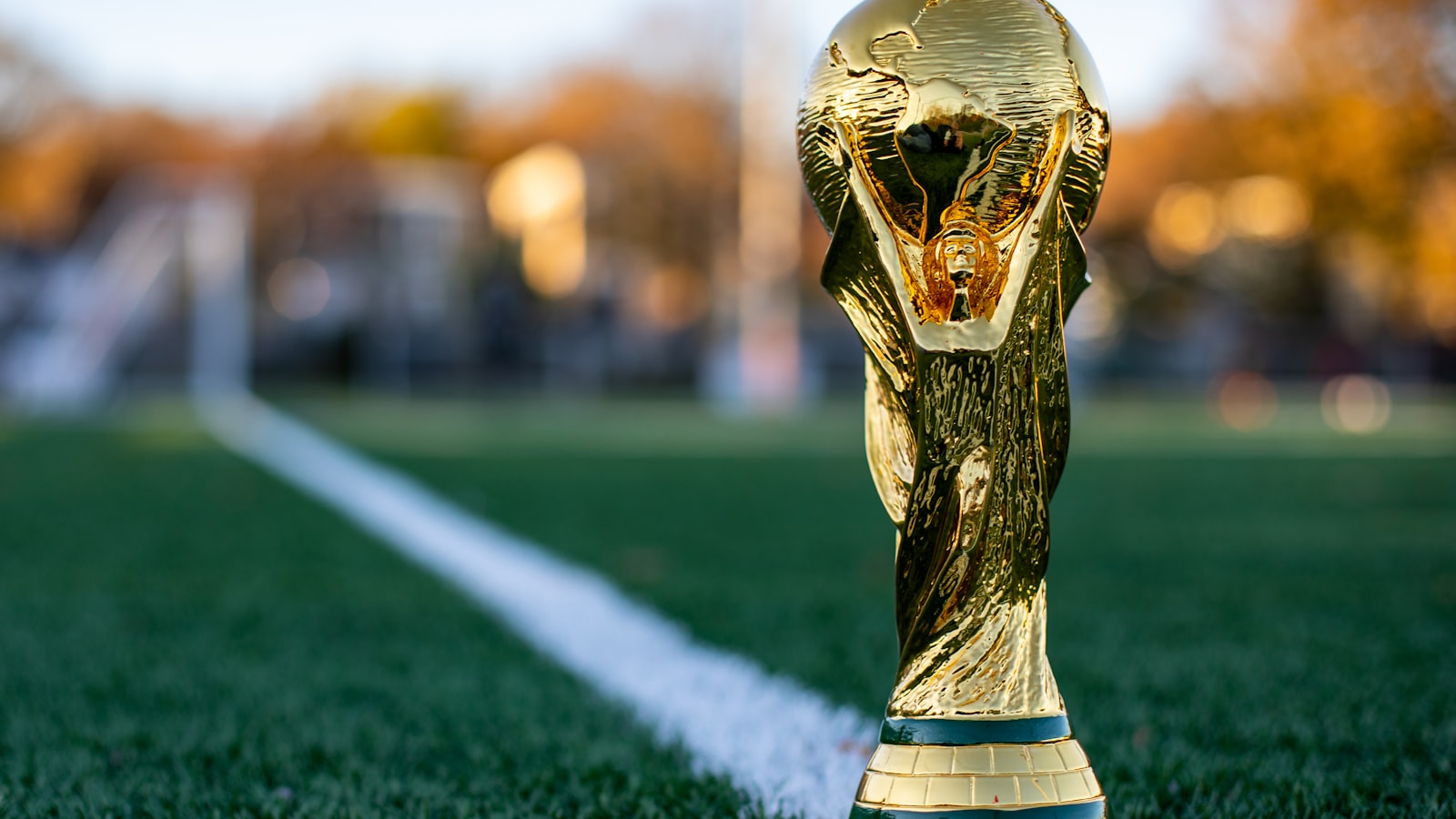
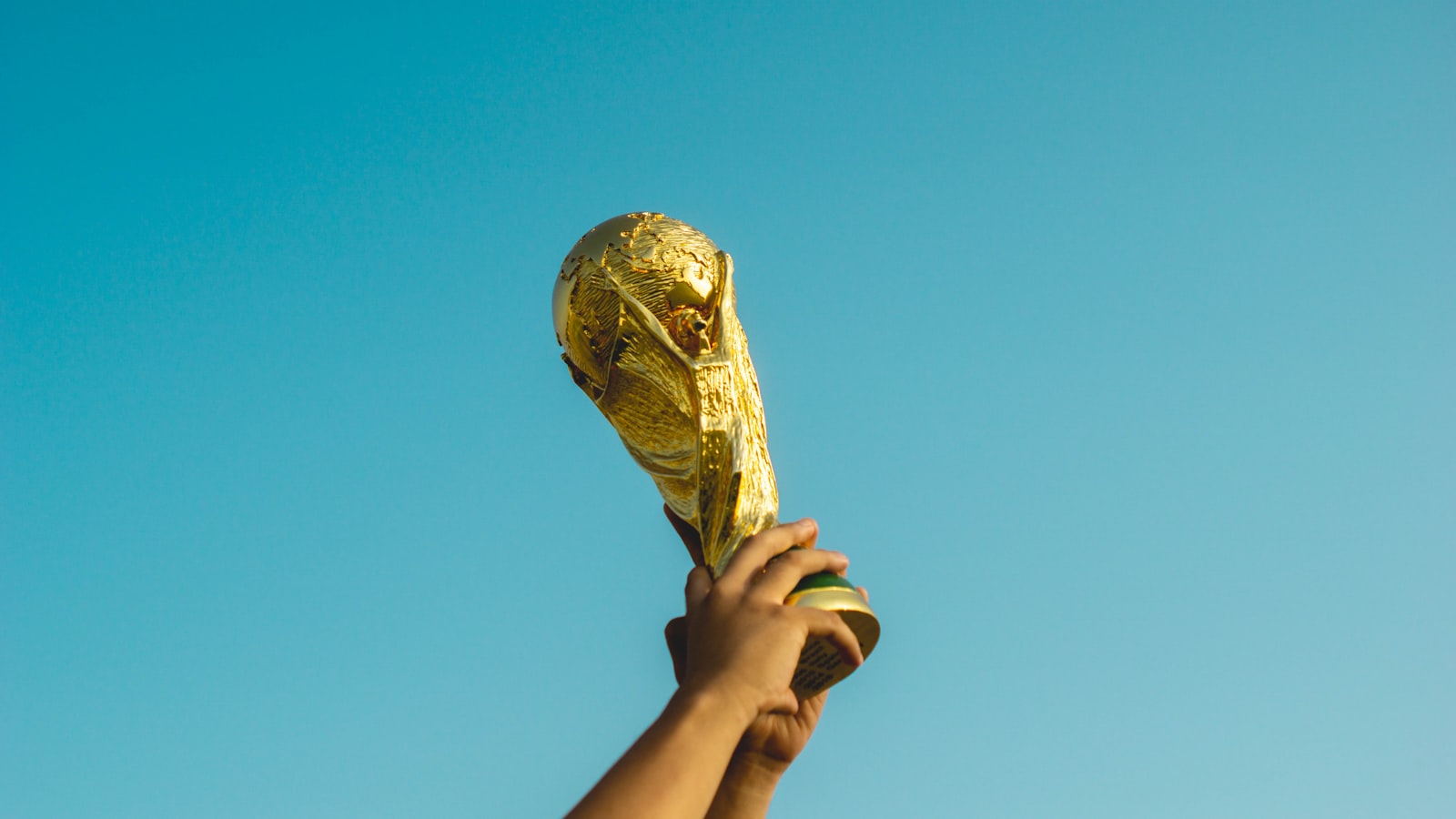
The current trophy debuted at the 1974 World Cup. It was designed by Italian sculptor Silvio Gazzaniga from a brief that read: "two athletes at the stirring moment of victory." The figures are deliberately abstract — two human forms upholding the Earth. The trophy is made of 18-carat gold with two bands of malachite (a green semi-precious stone) at the base. The hollow interior is the reason it weighs just 6.175 kg — early versions of the design, in solid gold, would have weighed roughly 70 kg, beyond what any victorious captain could realistically lift one-handed.
The most important rule about the current trophy: the winner does not keep it. After Brazil's permanent retention of the Jules Rimet, FIFA wrote a clause that ensures the FIFA World Cup Trophy itself stays in Switzerland after each ceremony. The winning federation receives a gold-plated bronze replica (the "FIFA World Cup Winners' Trophy"), which they keep forever. The 24-carat moment of the captain lifting the original lasts about forty-five minutes — then it goes back in its case and on its plane to Zurich.
“Two athletes at the stirring moment of victory.
”
Official tournament songs since 1990
The "World Cup song" is a different beast from the national anthem and from the trophy ritual — it is a pop product, commissioned by FIFA to soundtrack the tournament's media reels. Sometimes (Shakira's "Waka Waka," 2010) it crosses over and becomes a global hit. Sometimes (Pitbull, 2014) it fades the moment the final whistle goes.
Here is the chronology, verified against the Wikipedia "List of FIFA World Cup songs and anthems" with cross-references in Billboard's anthems ranking.
- It
Un'estate italiana / To Be Number One
Edoardo Bennato & Gianna Nannini. The most musically distinctive World Cup song before Shakira — and a still-recognisable melody to Italians of a certain age.
- US
Gloryland
Daryl Hall (of Hall & Oates) with Sounds of Blackness. Soaring gospel arrangement; the first FIFA-commissioned song to top charts in the host country.
- Fr
La Copa de la Vida — Ricky Martin
Plus the French-language 'La Cour des Grands' by Youssou N'Dour and Axelle Red. Ricky Martin's track is the one MTV played 200 times that summer.
- JK
Boom — Anastacia
Plus 'Anthem' (instrumental) by Vangelis. The Vangelis piece is the closest FIFA has come to an enduring 'theme music' identity for the tournament.
- De
The Time of Our Lives — Il Divo ft. Toni Braxton
Plus 'Celebrate the Day' / 'Zeit dass sich was dreht' by Herbert Grönemeyer ft. Amadou & Mariam.
- Za
Waka Waka — Shakira ft. Freshlyground
The single highest-charting World Cup song of all time, sold over 10 million copies worldwide. Plus R. Kelly's 'Sign of a Victory' with the Soweto Spiritual Singers as the official anthem. (K'naan's 'Wavin' Flag' was a Coca-Cola promo, not the FIFA song.)
- Br
We Are One (Ole Ola) — Pitbull ft. J.Lo & Claudia Leitte
Plus 'Dar um Jeito (We Will Find a Way)' by Santana, Wyclef Jean, Avicii and A. Pires. Critically panned at the time; nostalgia-rehabilitated later.
- Ru
Live It Up — Nicky Jam ft. Will Smith & Era Istrefi
Plus 'Living Football' (instrumental) by Hans Zimmer & Lorne Balfe — the closest FIFA has come to commissioning a proper modern theme.
- Qa
Hayya Hayya (Better Together) — Trinidad Cardona, Davido, AISHA
The lead single from FIFA's first-ever multi-track 'Official Soundtrack,' released in stages over the tournament.
- 26
Dai Dai — Shakira ft. Burna Boy
Shakira's second WC song (sixteen years after Waka Waka). Released May 2026, multilingual (English, Spanish, with Italian, French and Japanese phrases). Royalties earmarked for the FIFA Global Citizen Education Fund.
"Dai Dai," the 2026 song
The 2026 official song was confirmed in mid-May 2026 by NPR and aggregated coverage in Parade. The track, called "Dai Dai," is a duet between Shakira (Colombian, 49) and Burna Boy (Nigerian Afrobeats artist, 35). It is multilingual — English and Spanish dominate, with phrases in Italian, French and Japanese. Royalties from the track go to the FIFA Global Citizen Education Fund.
A few facts that make "Dai Dai" notable as a piece of WC song-history:
- Shakira is the first artist to be credited as the lead on two official FIFA World Cup songs. "Waka Waka" was 2010; "Dai Dai" is 2026. No other lead artist has had two.
- Burna Boy is the first Nigerian artist credited on a FIFA tournament song's lead. West African Afrobeats has dominated global streaming since 2020; "Dai Dai" is the first time FIFA's commercial machinery has reflected that.
- The instrumental theme is separate. "The Official FIFA World Cup 26™ Theme" is the instrumental piece played on broadcasts; the credit goes to Zachary Aaron Golden.
The pre-match anthem moments that became football folklore
A small selection of anthem cutaways that have entered the canon.
- Maradona singing the Argentine anthem before the 1986 final — eyes closed, chin raised, mouth wide. The image FIFA still uses on its retrospective edits.
- The Italian players at Euro 1990 and World Cup 2006 — full-bodied operatic delivery from the entire squad. Italy are not at WC26, but the archive matters.
- France's "Allez les Bleus" rendition before 1998's final. A 20-year-old Zidane mouthing the words; an hour later, two headed goals.
- Germany pre-2014 final, Maracanã. The entire German press complement at the stadium reported the squad sang quietly — saving voice for the actual football. They won 1-0.
- Argentina pre-2022 final, Lusail. Lionel Messi alongside Lionel Scaloni — both visibly tearful. Three hours later, Messi held the cup.
What changes for 2026's pre-match ritual
Three procedural updates worth knowing as you tune in.
- Multiple host anthems for host nations. Mexico, the United States and Canada play in their own country at least three times each in the group stage; their pre-match anthems will play to home crowds in numbers larger than Qatar 2022 ever saw.
- Stadium audio is being reworked at MetLife specifically. The 2026 final venue has a new sound system upgrade tied to the Tahoma 31 grass install — the trophy lift moment is acoustically engineered.
- The bilingual ceremony policy. FIFA has confirmed bilingual stadium announcements at every Canadian and Mexican venue (French/English in Canada, Spanish/English in Mexico). The bilingual format extends to the pre-match anthem introductions.
Quiz: anthems, by ear
If you want to test how well you can pick a national anthem from a description of its structure — useful before you sit down to watch 48 squads line up — try the listening quiz embedded earlier on this page. It works on description alone (key, tempo, the shape of the melody), so you can take it in a coffee shop.
FAQ
Frequently asked
Who composed the official FIFA anthem?
Why does the World Cup trophy weigh only 6.175 kg if it is gold?
What happened to the original Jules Rimet trophy?
What is the 2026 World Cup official song?
Has any artist had two World Cup official songs as lead artist?
Why are there sometimes two 'official' songs per World Cup?
Who lifts the trophy first when a team wins?
Did Coca-Cola's 'Wavin' Flag' (K'naan) count as the 2010 World Cup song?
Sources (5)
- Wikipedia — List of FIFA World Cup songs and anthemsaccessed 2026-05-19
- Billboard — World Cup songs rankedaccessed 2026-05-19
- NPR — Shakira / Burna Boy reveal 'Dai Dai'accessed 2026-05-19
- Parade — Shakira announces Dai Daiaccessed 2026-05-19
- FIFA — FIFA Sound Official Albumaccessed 2026-05-19
Sources (5)
- Wikipedia — List of FIFA World Cup songs and anthemsaccessed 2026-05-19
- Billboard — World Cup songs rankedaccessed 2026-05-19
- NPR — Shakira and Burna Boy reveal 'Dai Dai'accessed 2026-05-19
- Parade — Shakira announces Dai Daiaccessed 2026-05-19
- FIFA — FIFA Sound Official Albumaccessed 2026-05-19
You might also like