The 1986 Echo: How Mexico '86 Still Shapes WC26
Maradona's tournament. The 24-team format. Altitude and afternoon heat. The third time Mexico hosts — and the lessons 1986 wrote about what comes next.
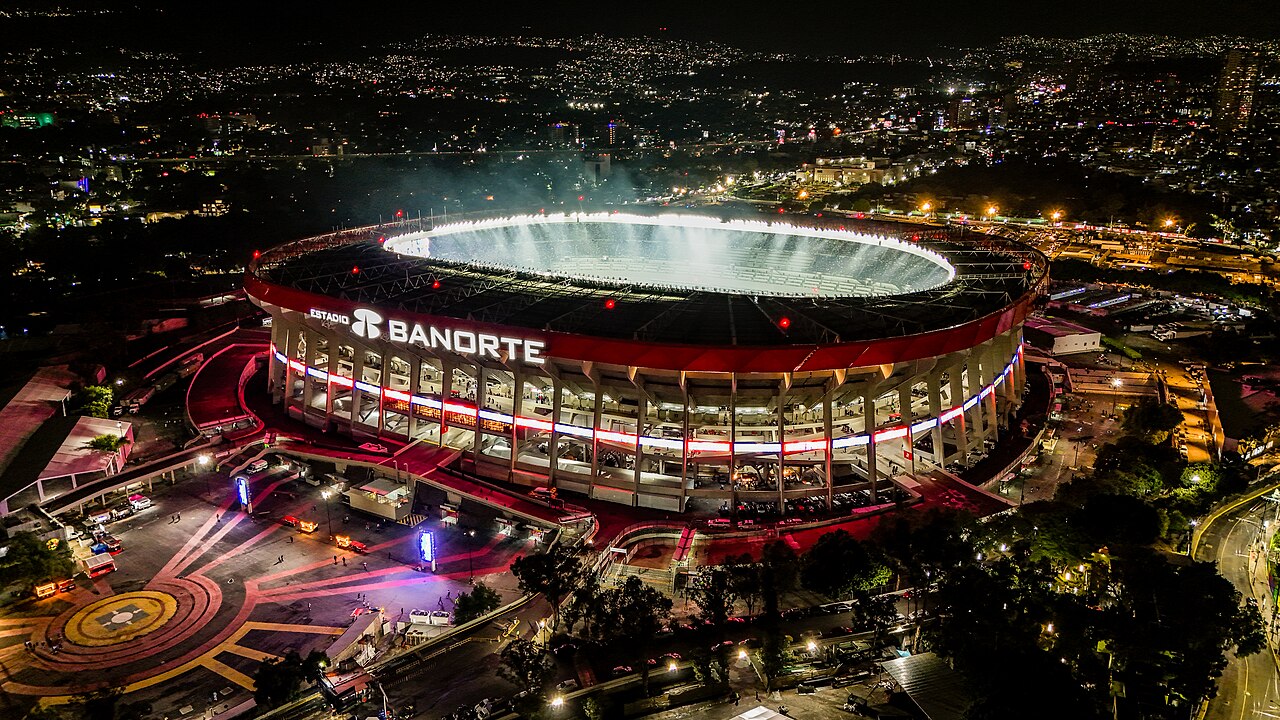
On 2026-06-11, when Mexico kicks off the World Cup against South Africa at Estadio Azteca, it will be the third time the Azteca has hosted an opening World Cup. The first was 1970. The second was 1986. The 2026 opener completes a triptych no other stadium in the world will ever match — and Mexico becomes the first country in history to host three World Cups.
That alone is the obvious story. But 1986 echoes through WC26 in deeper structural ways. The first expanded-format World Cup (24 teams, from 16) was Mexico 1986. The first all-altitude World Cup with daytime kickoffs designed for European TV was 1986. The first politically-fraught FIFA appointment that paired a Latin American host with North American broadcast money was 1986.
Nearly every conversation we are having about the 2026 tournament — the format expansion, the heat, the FIFA politics, Mexico's identity as host — was first had in 1986. This is the echo.
The 1986 short version
Tournament: 24 teams, 12 venues, 52 matches across 39 days (2026 has 48 teams, 16 venues, 104 matches across 39 days — same window, double the size).
Format: 6 groups of 4, top two automatic to R16 plus four best third-placed teams. R16 onwards single elimination. This was the first WC with a round of 16 (replacing the 1982 second group stage). The 2026 round of 32 echoes this — both are first-ever knockout rounds added to absorb format expansion.
Hosting context: Mexico was a substitute host. Colombia was originally awarded the 1986 tournament in 1974, but withdrew in 1982 citing economic crisis. FIFA awarded it to Mexico in May 1983, after a 8.0 earthquake had devastated Mexico City in September 1985 — eight months before kickoff. The stadium repairs and tournament prep were among the fastest in WC history.
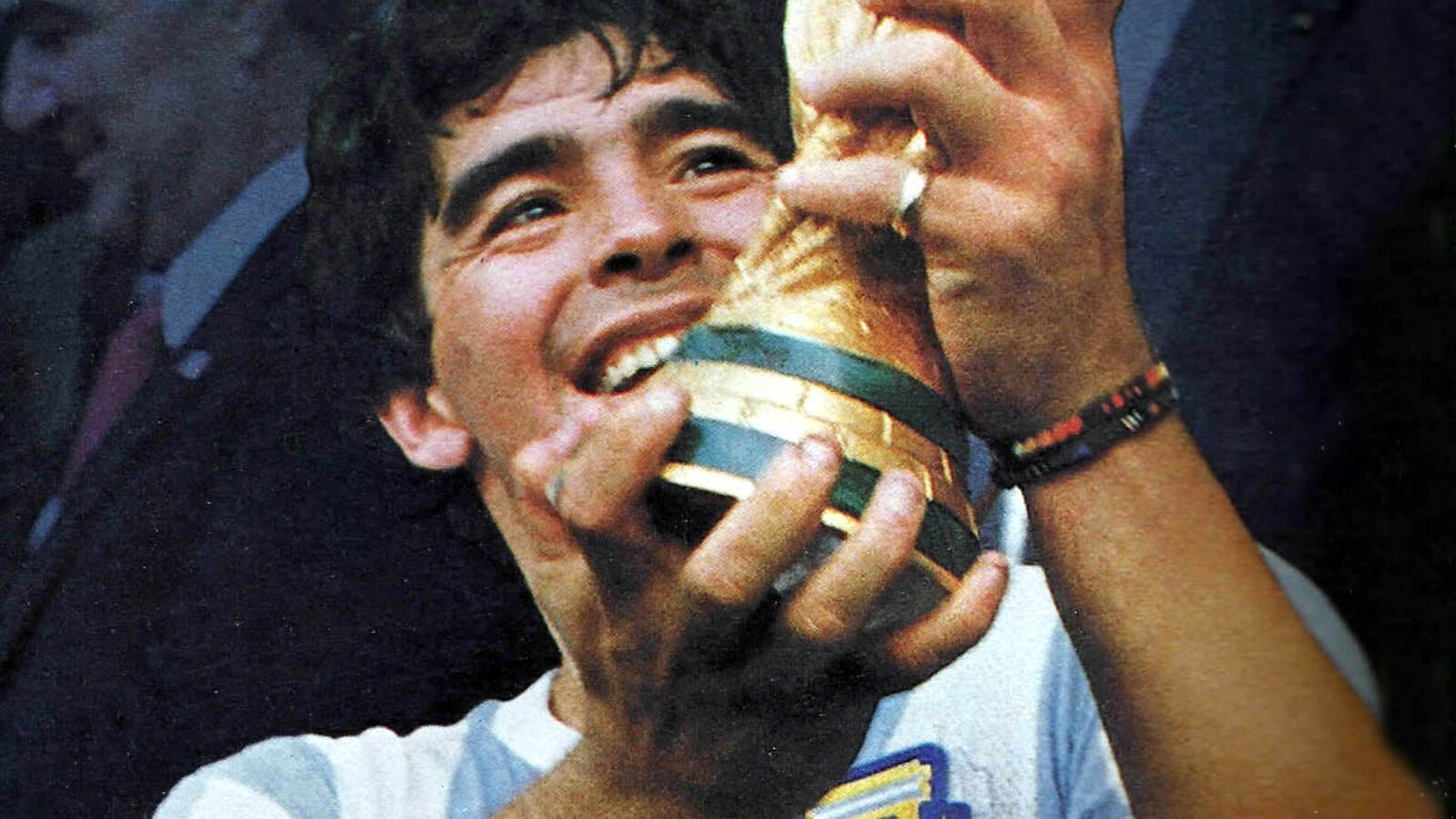
The champions: Argentina 3-2 West Germany, June 29, Estadio Azteca. Burruchaga's 84th-minute winner. The Maradona tournament's coronation.
Maradona's tournament
The 1986 tournament is structurally synonymous with one player.
In seven matches, Maradona scored 5 goals and assisted 5 more — including arguably the two most famous goals in football history, both in the quarter-final against England (June 22, Azteca):
- 51st minute: "Hand of God" — Maradona punched a Peter Shilton clearance into the net. The Tunisian referee Ali Bin Nasser missed it. England did not.
- 55th minute: "Goal of the Century" — Maradona ran 60 yards through five England defenders, dummied Shilton, slotted home. The goal a FIFA fan poll voted as the best ever scored at a World Cup.
Three days later, against Belgium in the semi-final, Maradona scored a near-identical solo goal — and FIFA's contemporary judges suggested it was, technically, the better of the two. He was 25 years old.
The 2026 question: is there a single player capable of carrying a tournament like that? The realistic candidates are Lamine Yamal (Spain, 18), Mbappé (France, 27 in 2026), and Vinícius Júnior (Brazil, 25). None match the structural dominance Maradona had over the 1986 squad. Argentina that year was Maradona plus a competent supporting cast. None of the 2026 favourites have that ratio.
“He had us all running around chasing him in training. After 10 minutes, we just stopped and watched. That was Mexico '86 before the tournament had even started.
”
The format expansion parallel
In 1986, FIFA expanded the World Cup from 16 to 24 teams. The 24-team format ran from 1982 (Spain) through 1994 (USA), giving way to 32 teams from 1998 (France) onwards. The 2026 expansion to 48 teams is the second large bump in the WC's history — and the structural questions are nearly identical.
In 1986 the worries were: too many weak teams, too many uneven group games, dilution of the "every match matters" tournament feel. The first mismatch in the 1986 group stage was South Korea 1-3 Argentina (Maradona toyed; Argentina coasted). The 2026 equivalents — Cape Verde, Curaçao, Jordan vs the top seven — are direct echoes.
The 1986 answer was to add a R16 (eight extra knockout matches) to give more competitive games. The 2026 answer is to add a R32 (16 extra knockout matches). The structural logic is identical: format expansion → more group-stage variance → more knockout-round games to compensate.
How well did 1986 work? The 1986 tournament is widely regarded as a tactical success. The R16 added unforgettable matches (France-Italy, Spain-Denmark 5-1, Brazil-Argentina 1-0 in the QF). The 2026 R32 is structurally analogous — and the tournament's success or failure as a format will largely be decided on whether the R32 produces interesting matches.
Altitude, heat, schedule
Mexico City sits at 2,240m above sea level. Estadio Azteca is at altitude. In 1986, FIFA kicked off all matches at midday local time — the requirement of European broadcasters who wanted prime-time evening kickoffs. Players described it as "running with a wet blanket on your face."
In 2026, the same thing happens. Mexico's three host venues (Mexico City, Guadalajara, Monterrey) are all hot in June-July. Mexico City is 22-24°C daytime (mild) but is the altitude challenge. Monterrey is 33-35°C — one of the two hottest WC venues alongside Dallas.
The 1986 lesson: altitude affects the second 30 minutes of each half more than the first. Teams that pressed in the first 20 minutes ran out of legs by the 70th. Brazilians and Argentines (acclimatised at home elevations) handled it better than the Europeans. The 2026 equivalent: France's pressing midfield (Camavinga, Tchouameni) will face the same physiological problem in Mexico City's Group I matches if drawn to play there. Spain's de la Fuente possession game (less reliant on high-intensity sprints) handles it better.
- 1
Estadio Azteca opens
Capacity 105,000 for the Mexico Olympics. The venue would host two of football's most-watched matches before its 18th birthday.
- 2
Brazil 4-1 Italy at Azteca
Brazil's third star. The Carlos Alberto goal off Pelé's pass is voted the greatest team goal in WC history.
- 3
FIFA awards 1986 WC to Mexico
Colombia withdrew in 1982 citing economic crisis. Mexico stepped in on a tight timeline.
- 4
Mexico City earthquake (8.0)
10,000+ deaths. Damage to Azteca was minor, but the city's hosting capacity was in doubt with eight months to go.
- 5
Maradona scores twice vs England at Azteca
Hand of God in the 51st; Goal of the Century in the 55th. The quarter-final that defined his career.
- 6
Argentina 3-2 West Germany — 1986 Final
Burruchaga's 84th-minute winner off the Maradona pass. The Diego tournament's perfect ending.
- 7
Mexico vs South Africa — WC26 opener at Azteca
The third Estadio Azteca opener. Mexico becomes the first three-time WC host country.
The five Azteca matches in 2026
Estadio Azteca hosts 5 matches at WC26 (the same number as Mercedes-Benz, Atlanta and Hard Rock, Miami). The five:
- Opening match: Mexico vs South Africa, June 11.
- Two further group matches (Mexico's second match, and at least one Group A match without Mexico).
- At least one knockout match — likely a R32 or R16 fixture given Mexico's projected route.
Capacity is ~87,500 post-renovation (a slight reduction from the historical 105,000 figure, after FIFA's seating requirements and the corner-seat removals). The renovation included a new pitch (hybrid grass), upgraded press facilities, and modernised broadcast infrastructure.
The most likely iconic moment of WC26 at Azteca is not another Maradona-equivalent solo goal. The realistic candidate is a Mexico host-knockout match — the moment Mexico either eliminate a top-tier opponent (the dream that 1986 wrote) or are eliminated by one (the reality of every Mexican WC since 1986).
The FIFA politics parallel
In 1986, FIFA was led by João Havelange, who had pushed the format expansion through over European federation opposition. The financial logic was simple: more teams = more federations = more votes for Havelange's re-election. The football logic was harder.
In 2026, FIFA is led by Gianni Infantino, who pushed the 48-team format through in 2017 over a softer European objection. The financial logic is identical: more teams, more federations, more broadcasting revenue, more votes. The football logic is again contested.
Both expansions came in pre-election cycles. Both were paired with North American host country bids (Mexico 1986 with US-funded broadcast contracts; CAN/MEX/USA 2026 with the largest stadium and broadcast deal in WC history). Both reorganised the tournament structure to absorb the extra teams via a new knockout round. The echo is structural, not just thematic.
What 1986 means for the 2026 final
The 1986 final was Argentina 3-2 West Germany at Azteca, June 29. The 2026 final is MetLife, July 19. Different venues, different countries — but if Argentina reach the final, the Mexico-Argentina-Germany triangle from 1986 will be culturally present.
The structural question for the 2026 final: does the 48-team bracket and seven knockout rounds produce more or fewer 5-star finals? The historical pattern says: more variance = more chances for an unforgettable match. The 1986 final was a 3-2 epic with two German equalisers. The 1990 rematch was a grim 1-0. The variance is real.
The structural lessons
The 1986 tournament is the closest historical analog to 2026 for four specific structural reasons:
- Format expansion: 16 to 24 teams in 1986; 32 to 48 in 2026. Both required a new knockout round.
- Host complexity: Mexico stepped in as a substitute host in 1986; CAN/MEX/USA is the first multi-host WC. Both required FIFA to invent new operational frameworks.
- Climate variance across venues: 1986 had altitude (Mexico City) and heat (Monterrey). 2026 has altitude, marine cool (Vancouver, Seattle), and extreme heat (Dallas, Houston, Monterrey). The variance is greater now but the underlying structural challenge is the same.
- FIFA politics: Both tournaments arrived in pre-election cycles with a North American broadcast deal as the financial backbone.
The lesson 1986 wrote: the format is fine; the football decides the legacy. Maradona's tournament made the expansion feel inevitable. Whether 2026's tournament has a comparable individual or team performance is the open question. The candidates are real — Spain's de la Fuente system, Mbappé's third WC, Yamal's debut, Messi's farewell — but none of them have the Maradona ratio that defined 1986.
FAQ
Frequently asked
Why was Mexico chosen to host both 1986 and 2026?
What was the 'Hand of God' goal?
Why was the 1986 World Cup played at midday in Mexico?
How many matches did Estadio Azteca host in 1986?
What is the connection between the 1986 and 2026 formats?
Sources (6)
- FIFA — 1986 FIFA World Cupaccessed 2026-05-19
- Wikipedia — 1986 FIFA World Cupaccessed 2026-05-19
- Wikipedia — Estadio Aztecaaccessed 2026-05-19
- The Guardian — Maradona / 1986 retrospective hubaccessed 2026-05-19
- ESPN — World Cup history archiveaccessed 2026-05-19
- Football Ground Guide — Estadio Azteca renovationaccessed 2026-05-19
Sources (5)
- FIFA — 1986 FIFA World Cupaccessed 2026-05-19
- Wikipedia — 1986 FIFA World Cupaccessed 2026-05-19
- The Guardian — Maradona's 1986 World Cup retrospectivesaccessed 2026-05-19
- ESPN — 1986 World Cup retrospectivesaccessed 2026-05-19
- Wikipedia — Estadio Aztecaaccessed 2026-05-19
You might also like